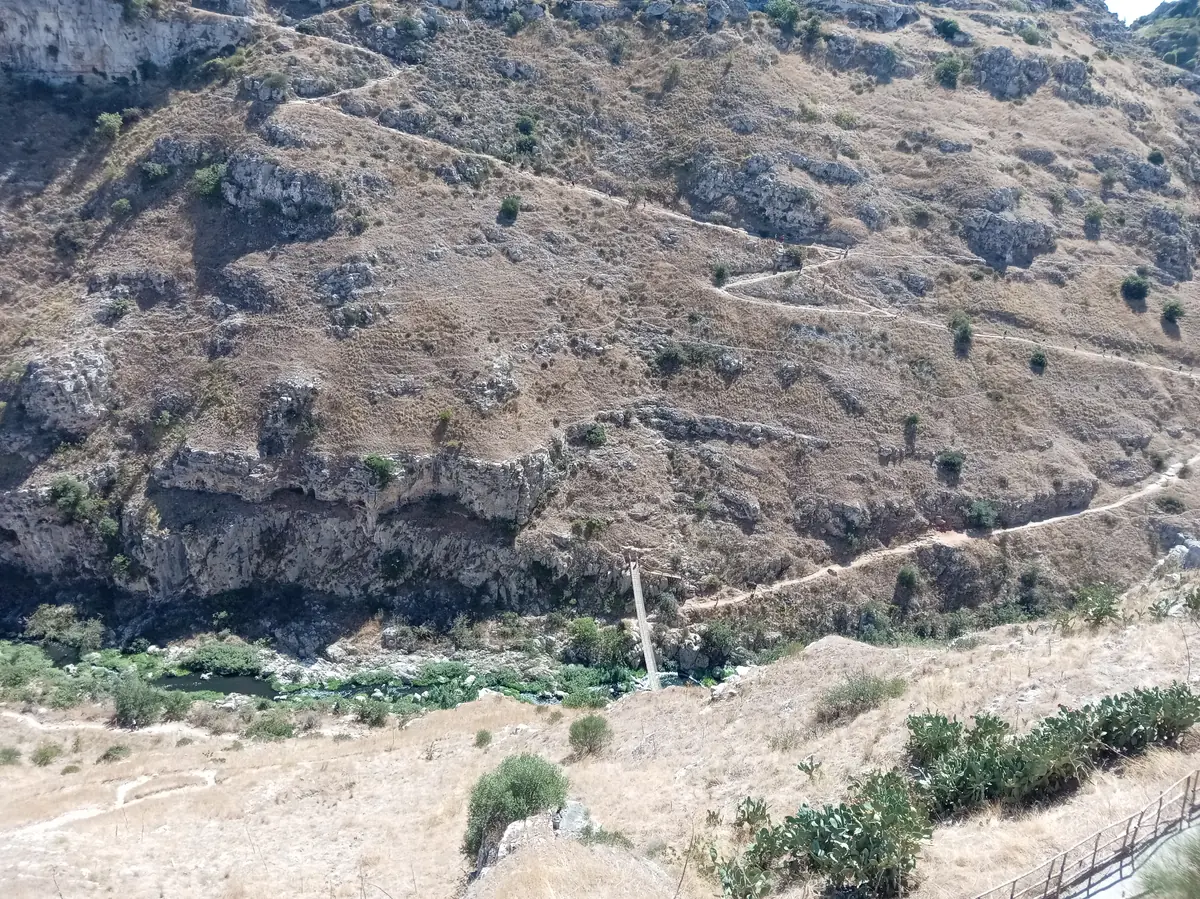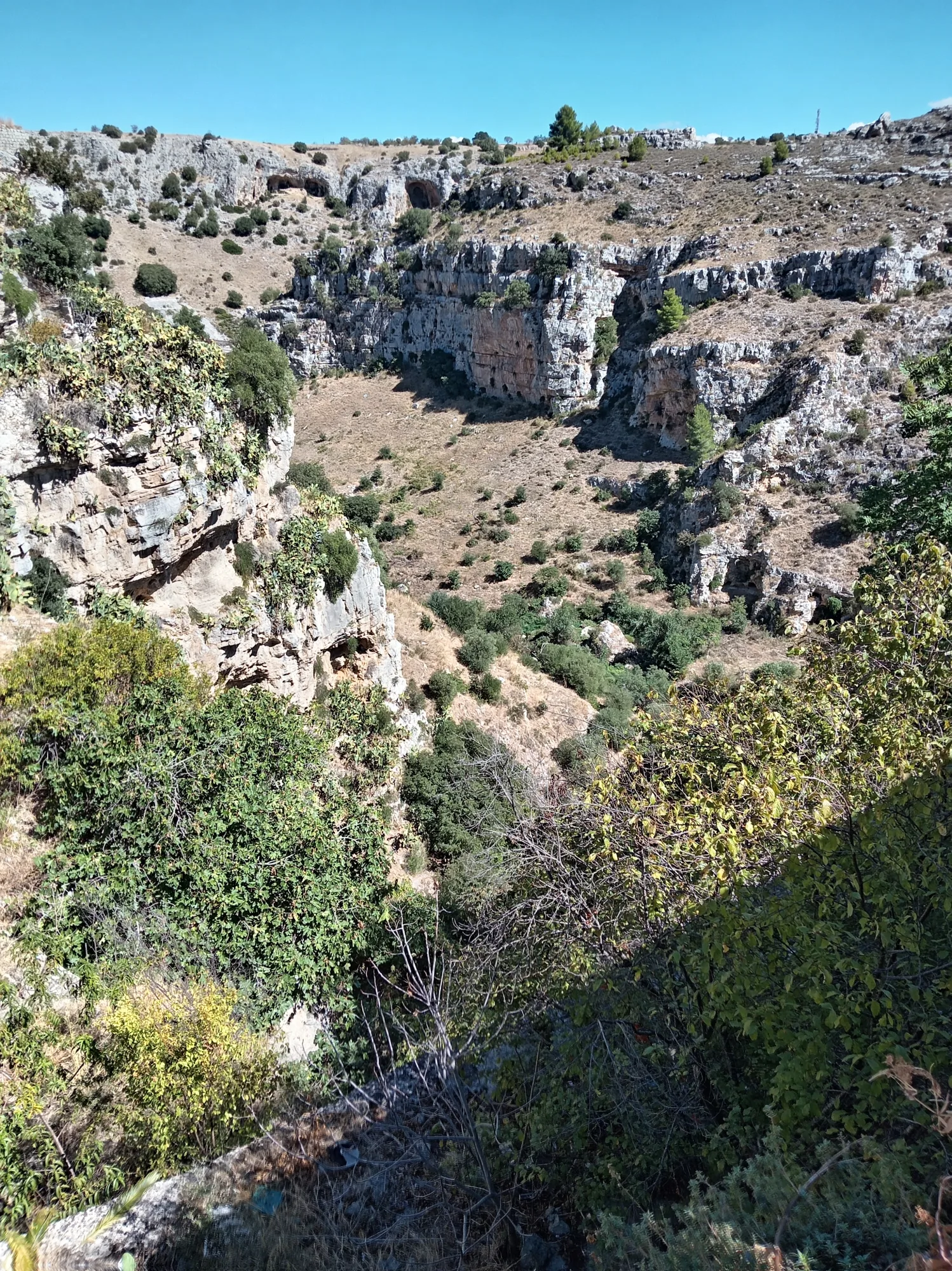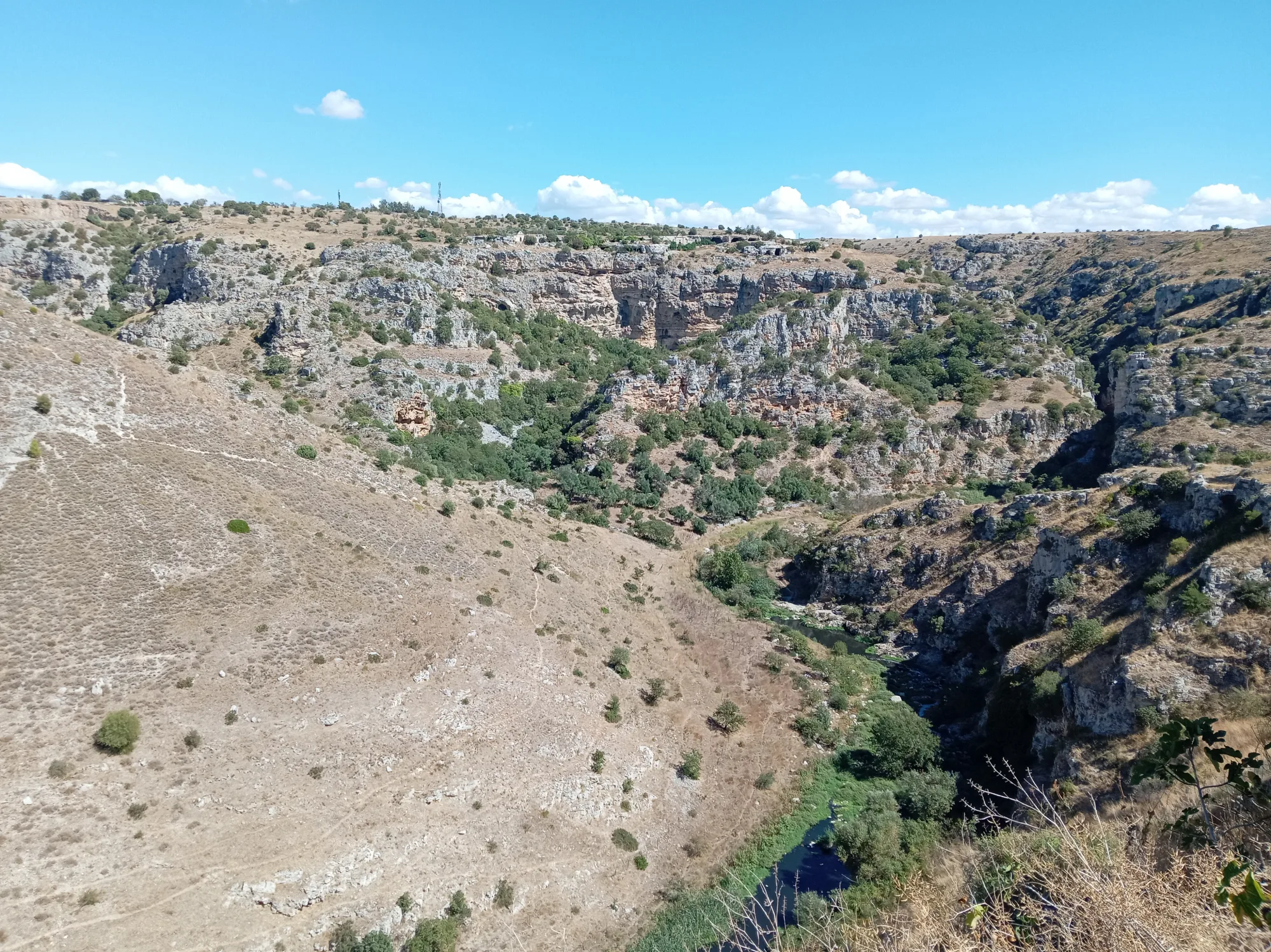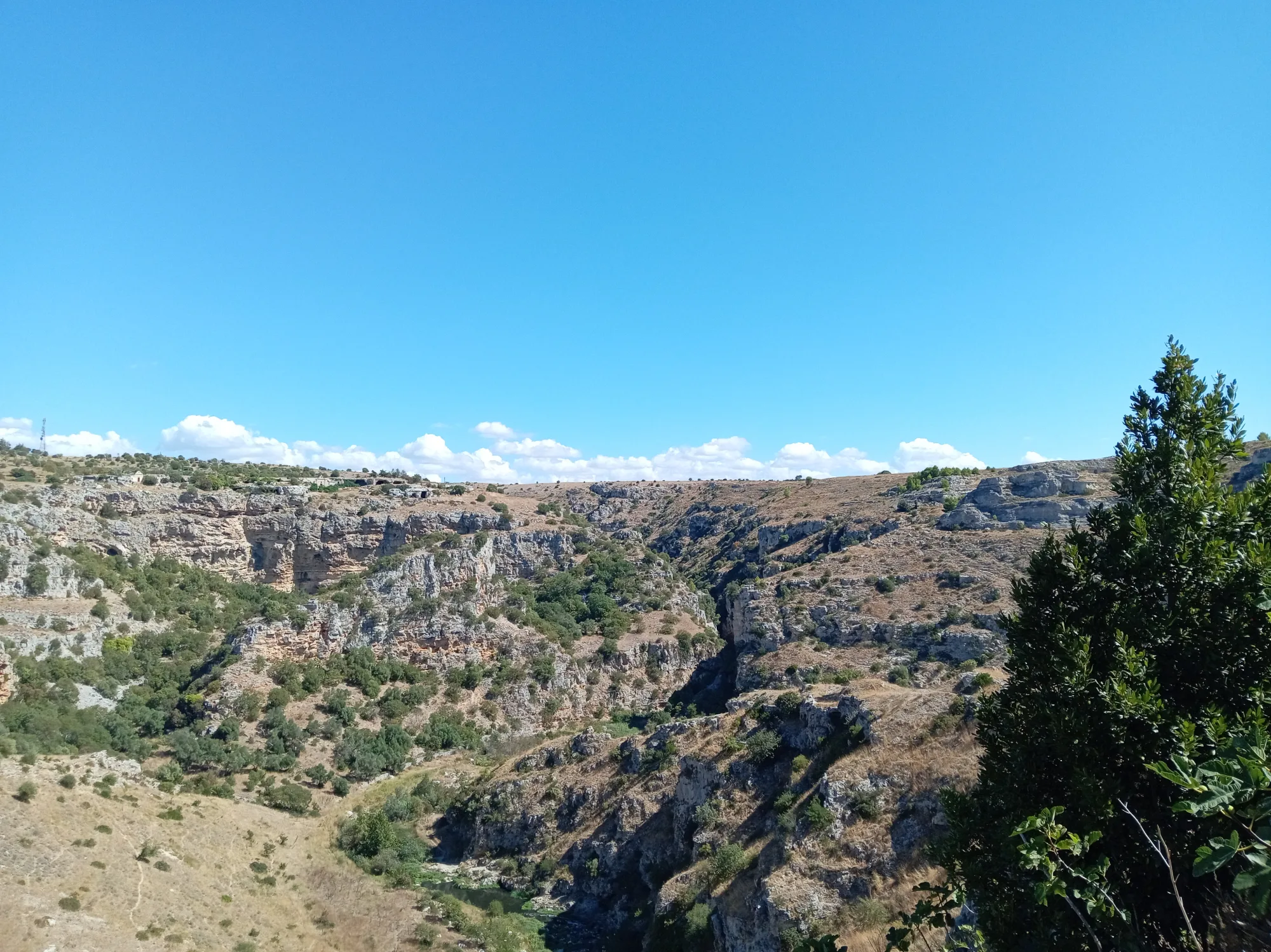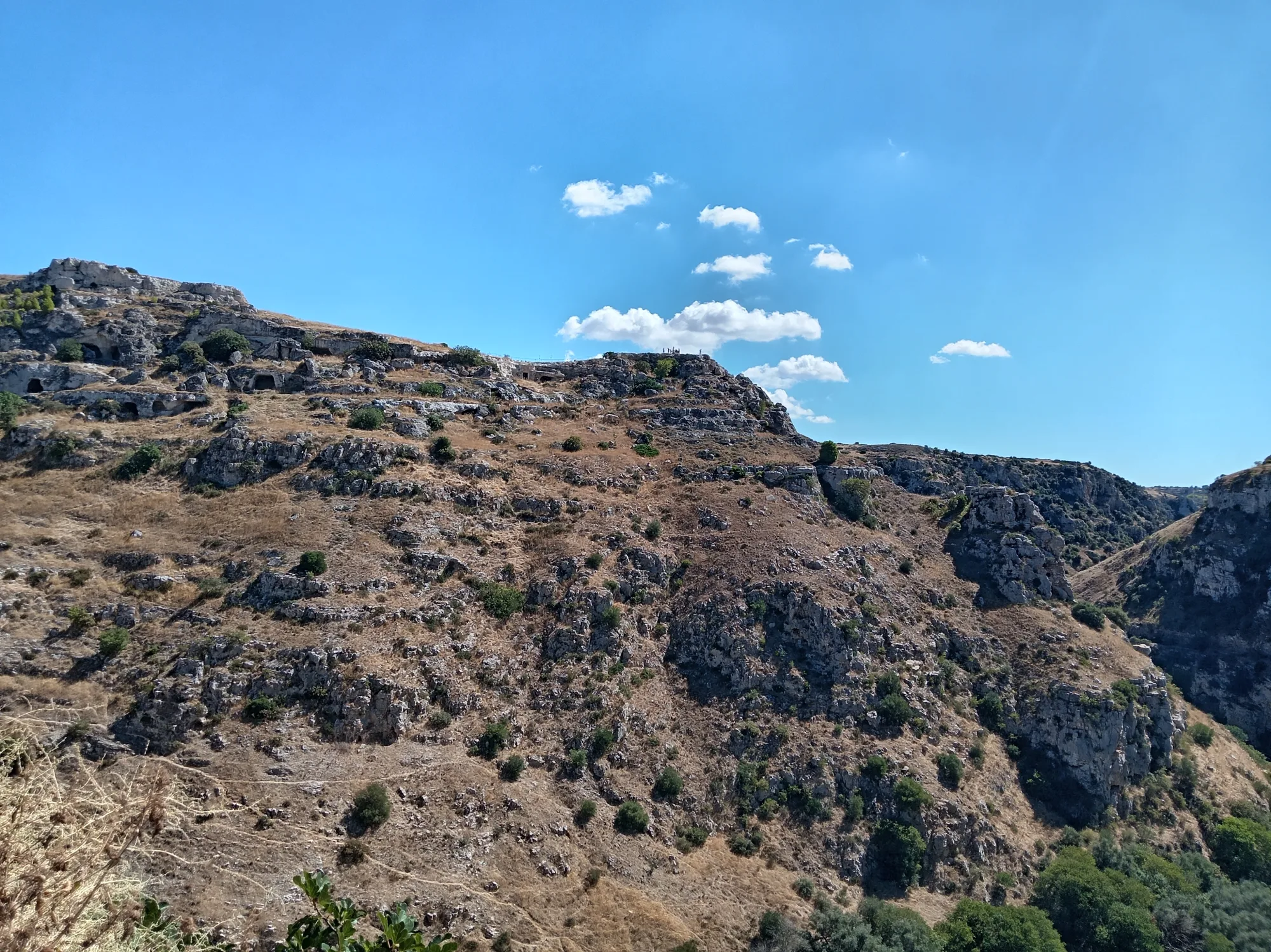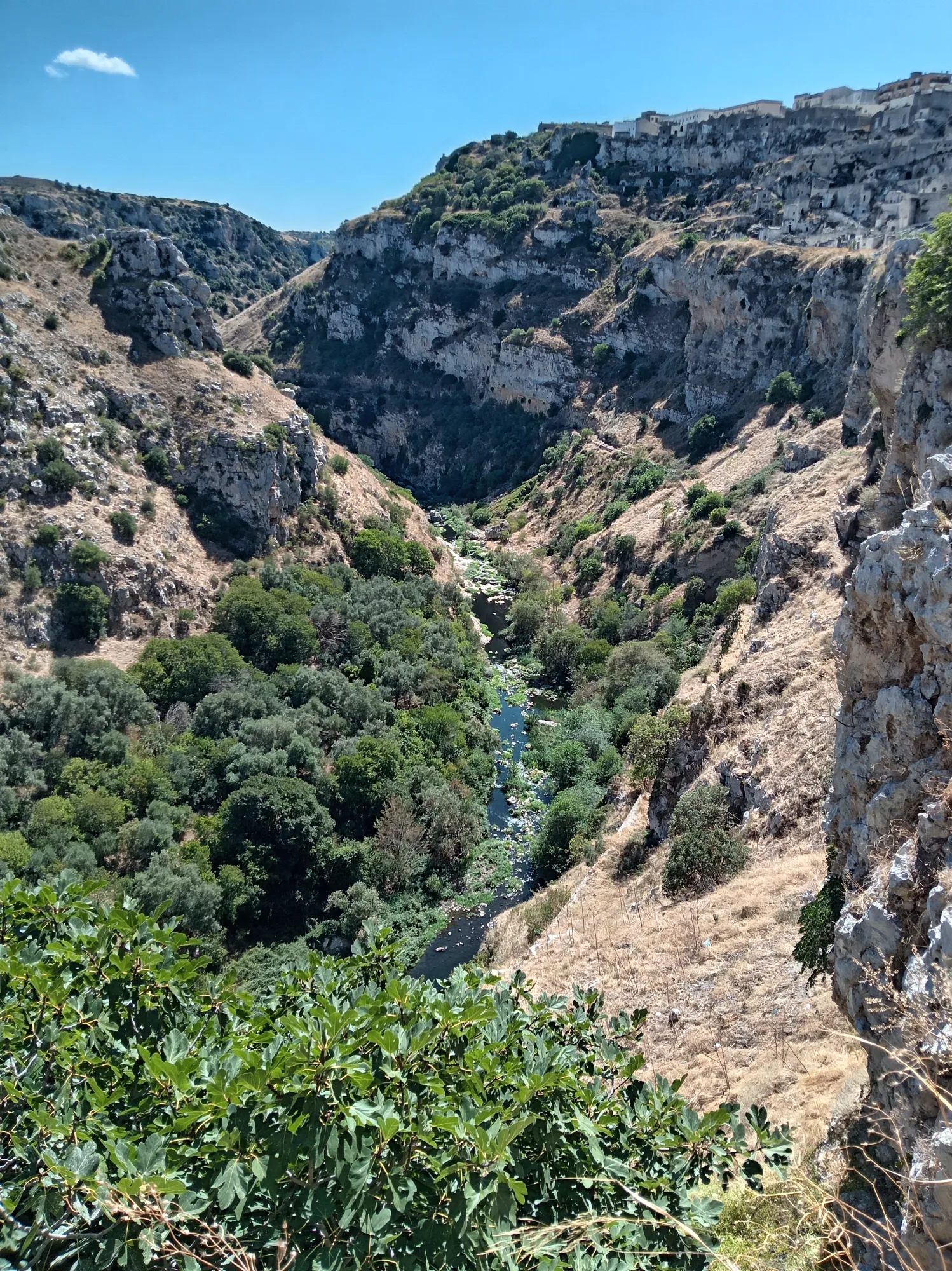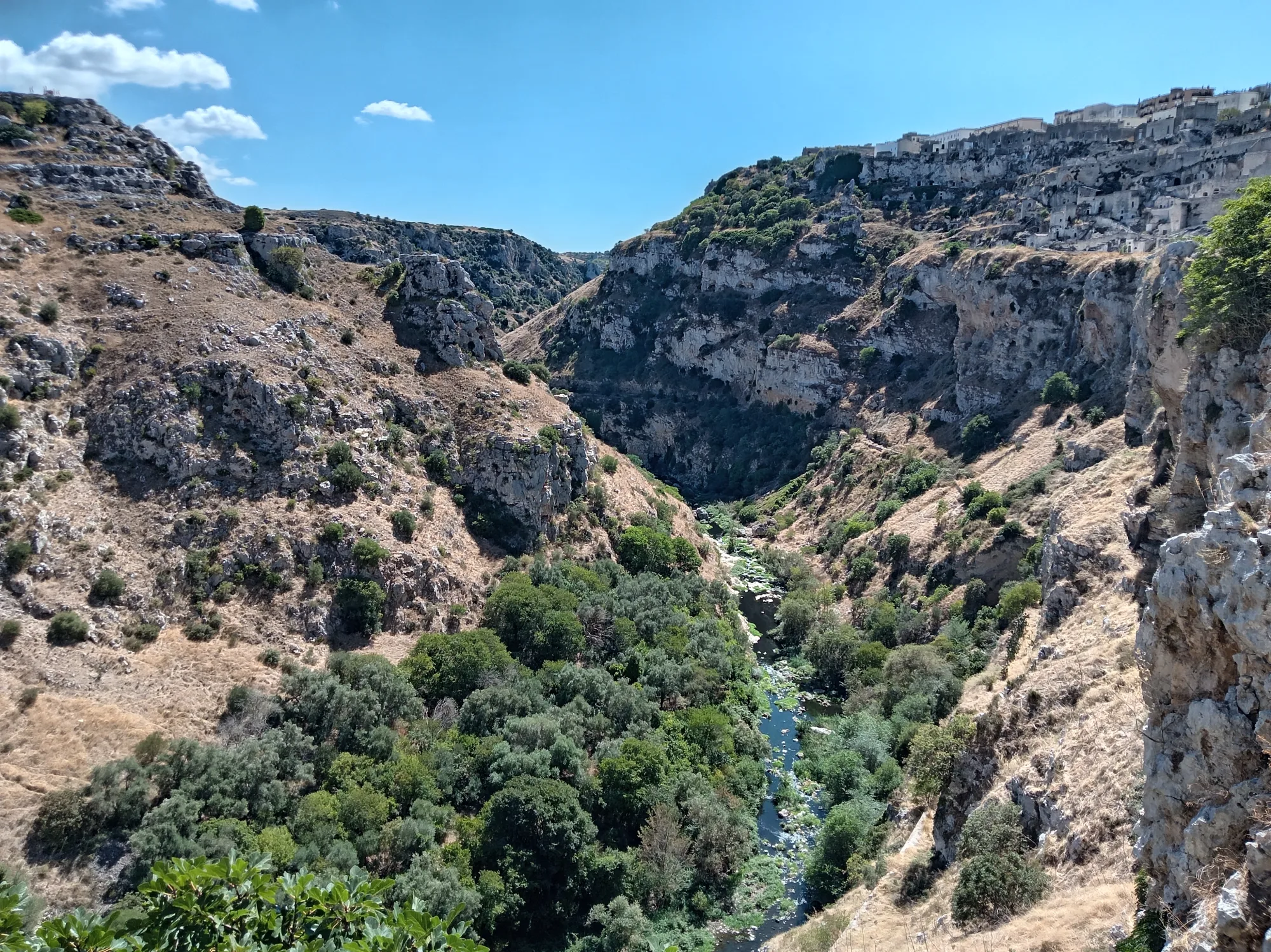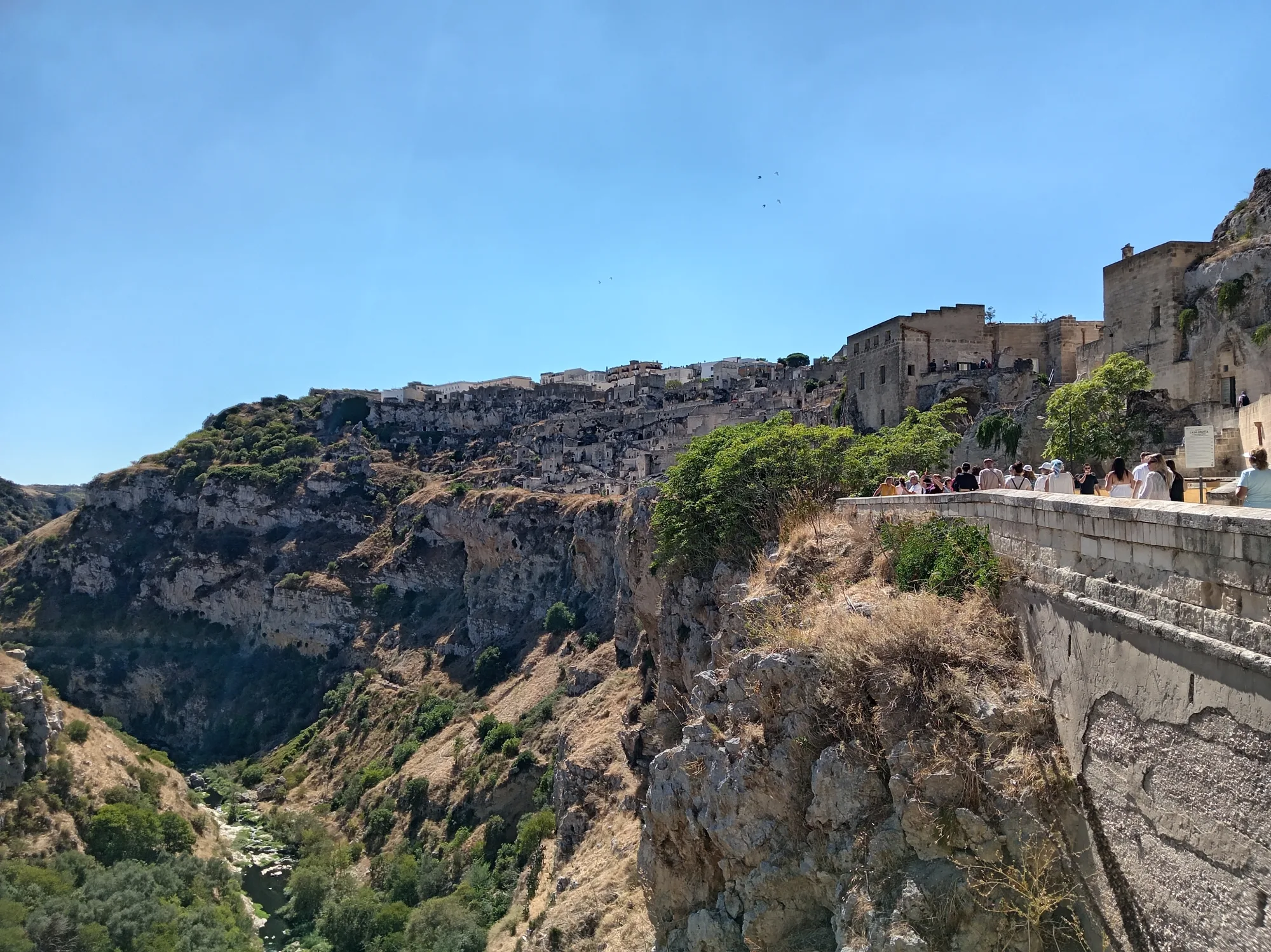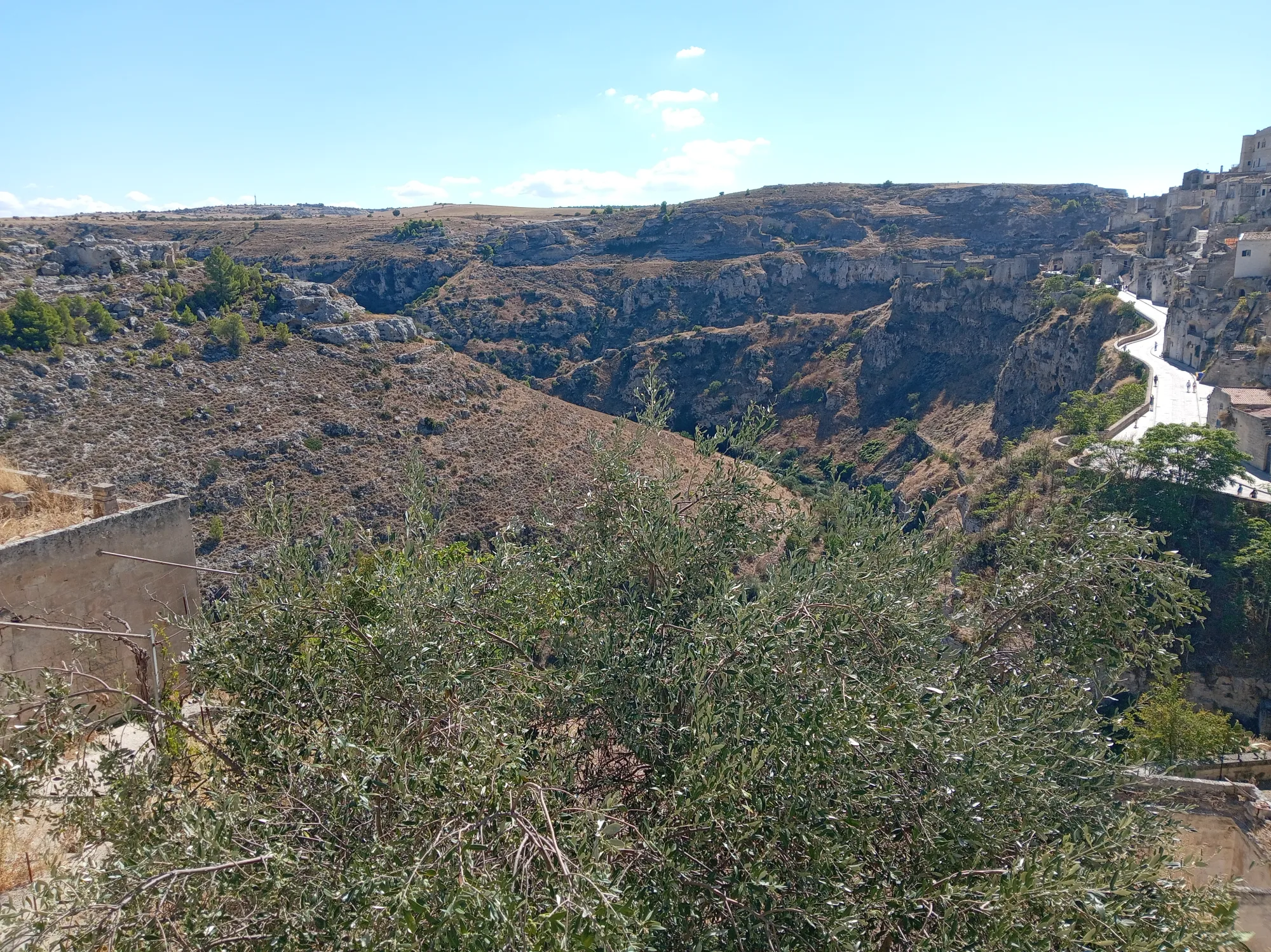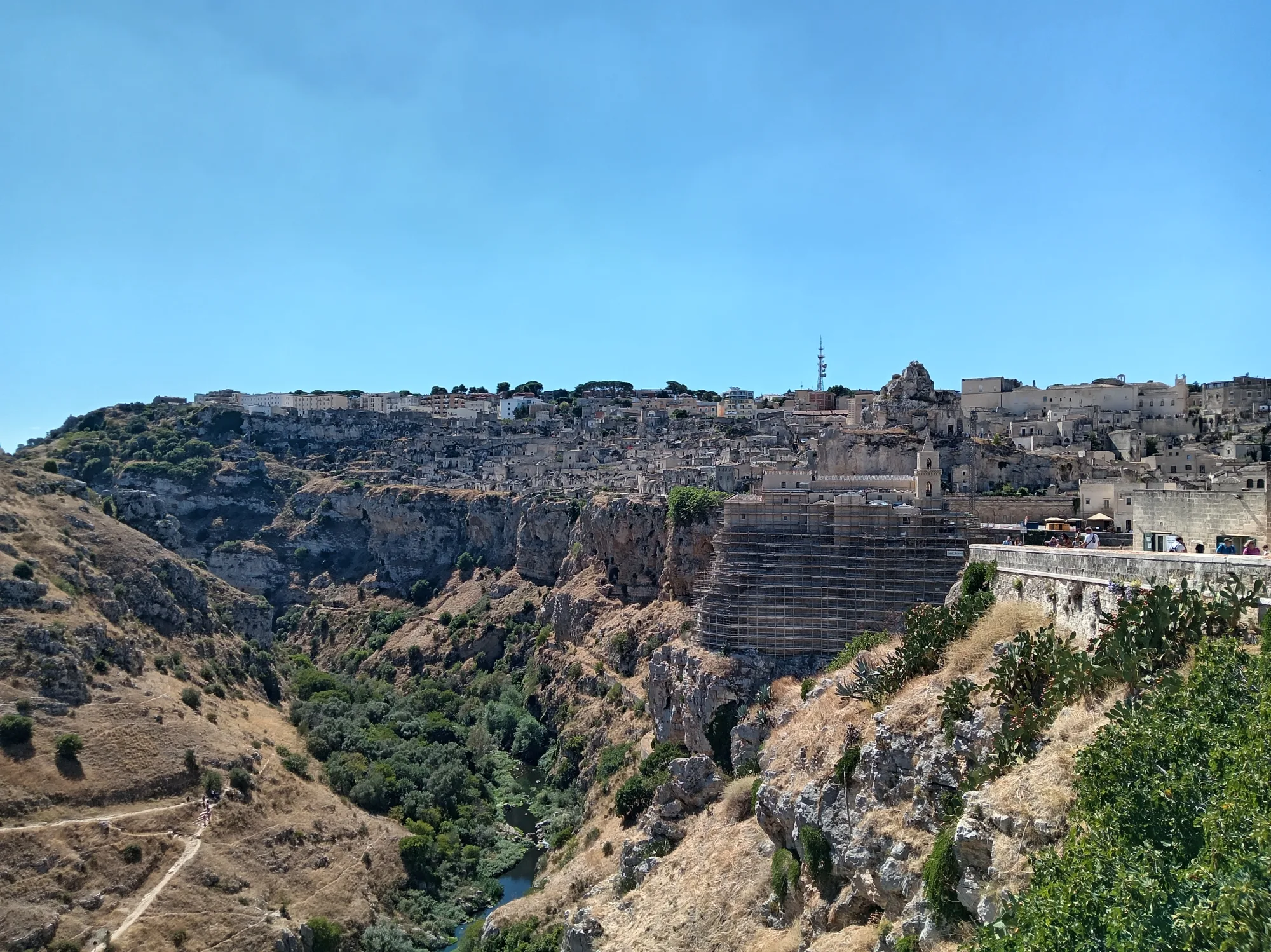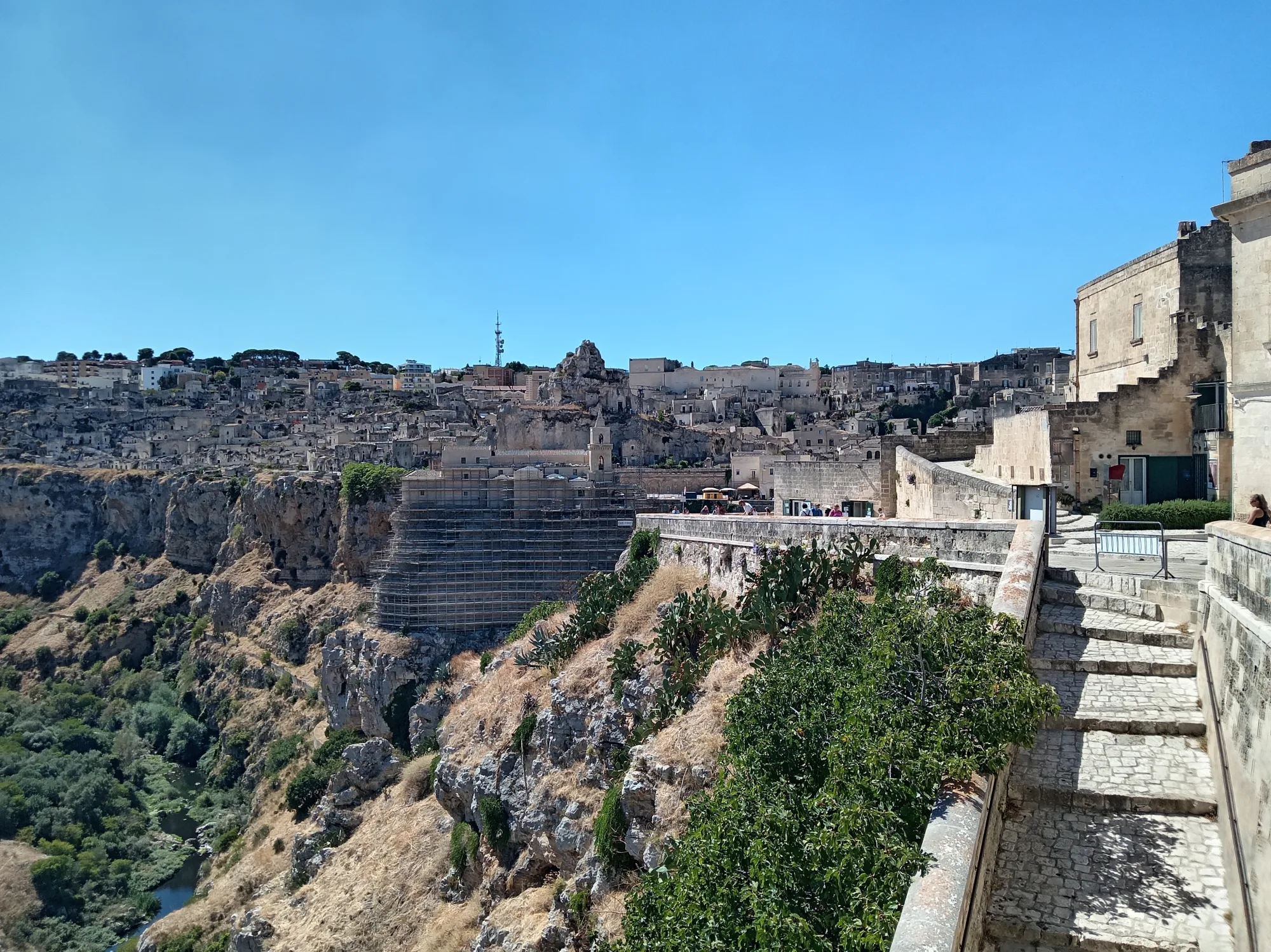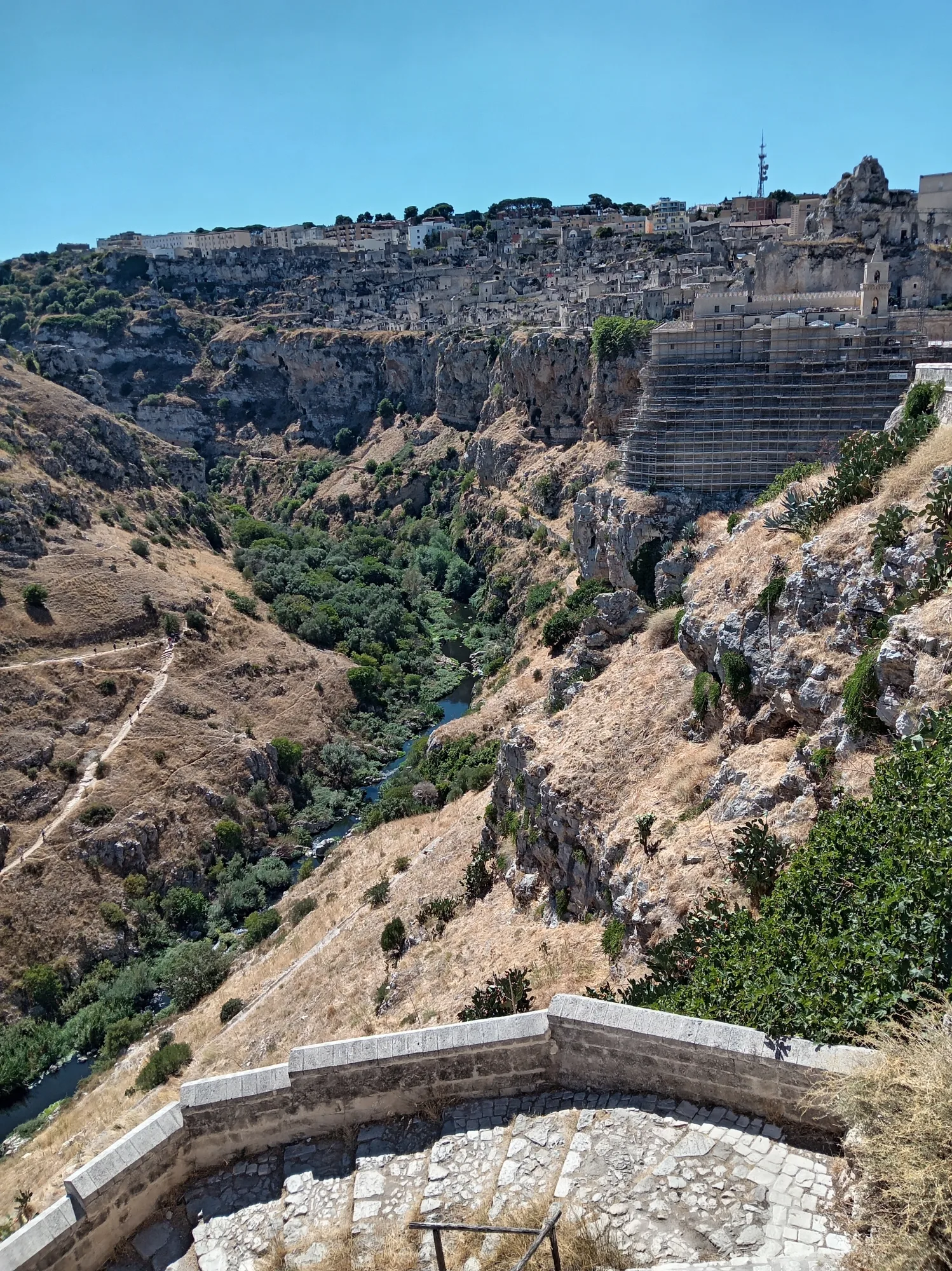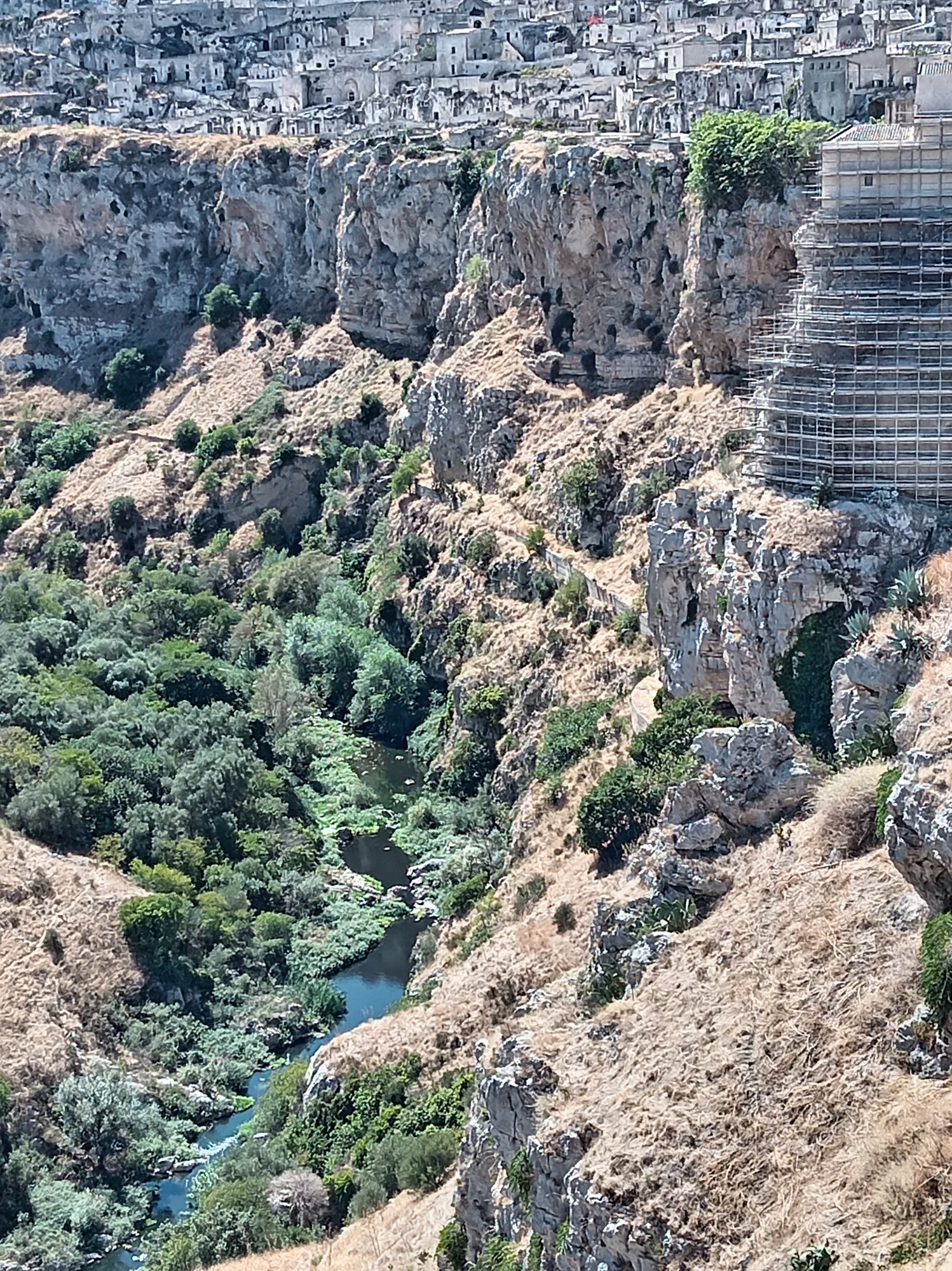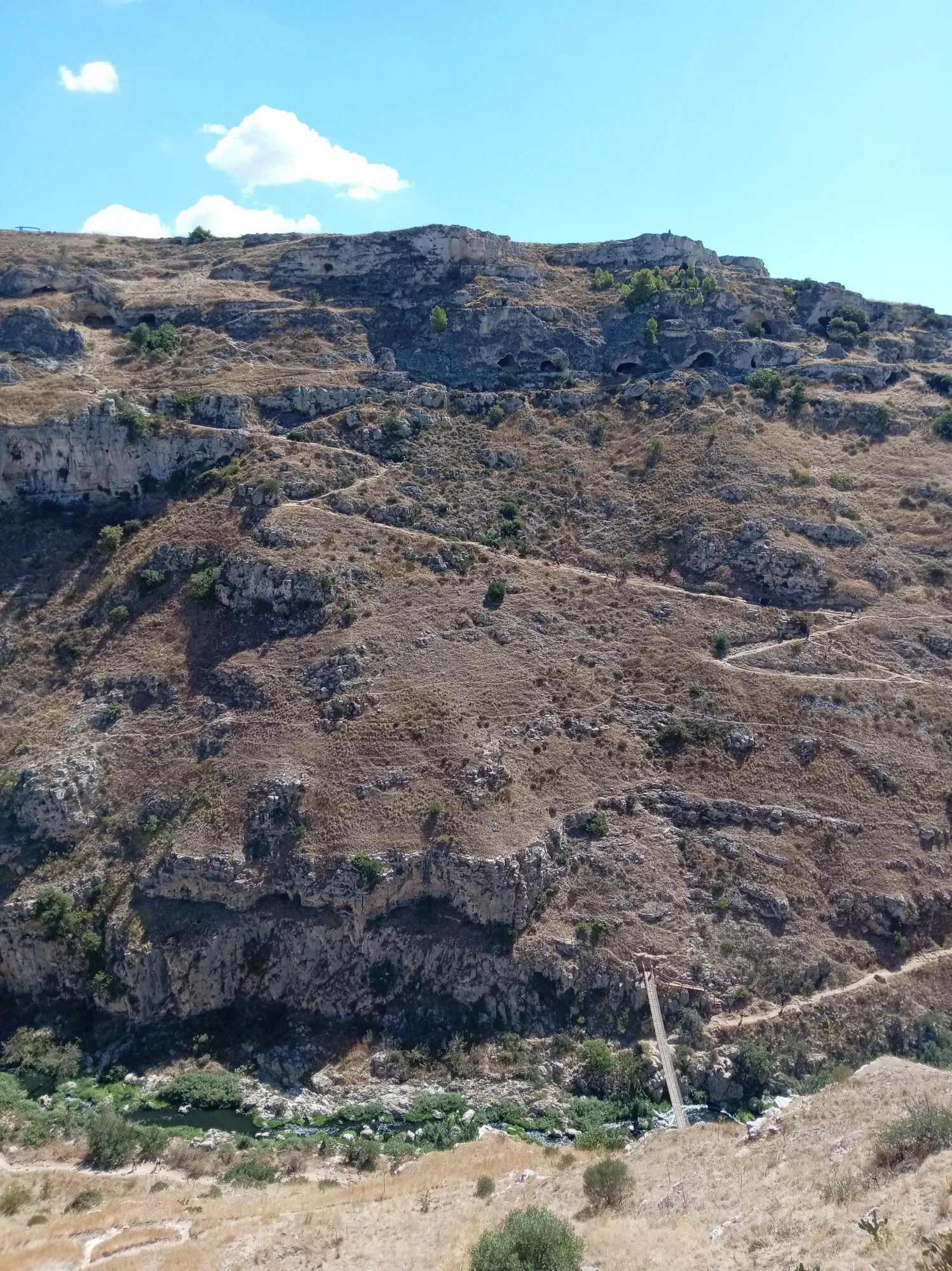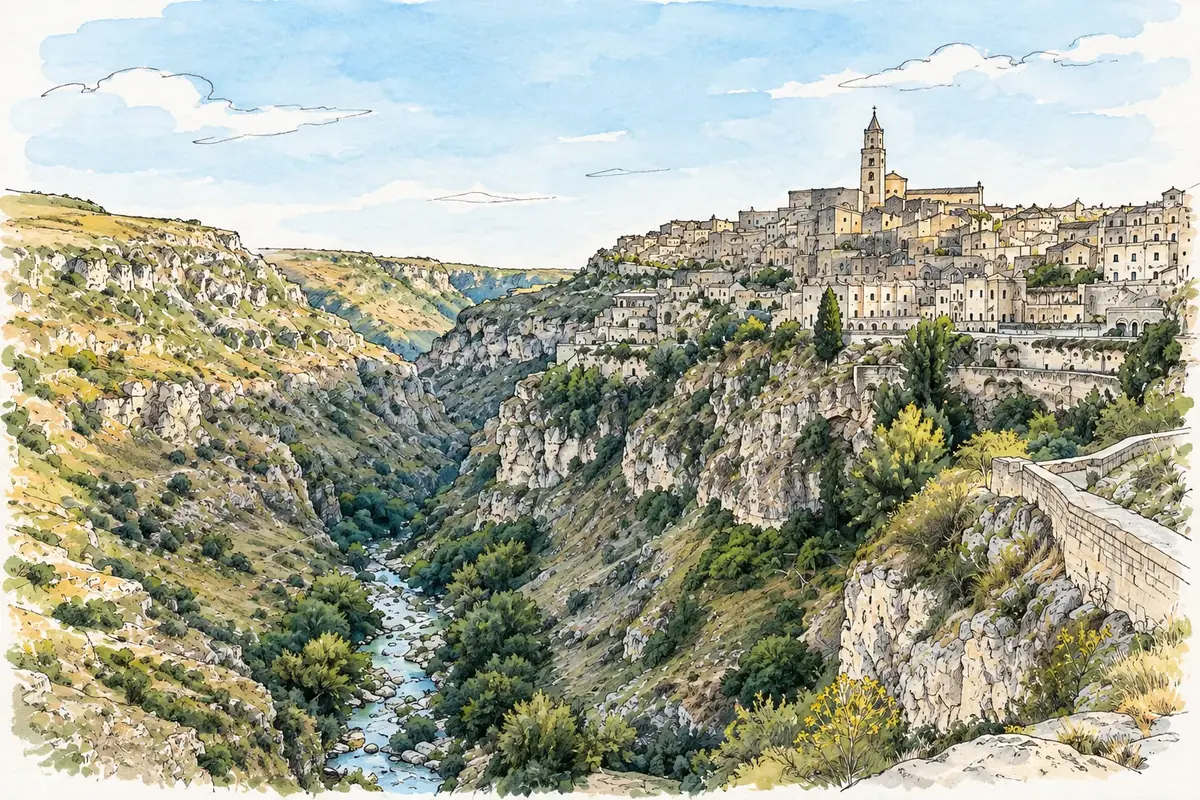
The gorge that explains everything: without it there would be no Sassi. It provided shelter, building material and the first caves all at once.
How it formed
The Gravina is a deeply incised valley that the stream of the same name has carved into the limestone over long periods of time. Matera lies on its western flank, the plateau of the Murgia on its eastern flank. Gorges like this – called gravine in Italian – occur in several places in Apulia and Basilicata; they are the hallmark of this karst landscape.
Why people settled here
Three reasons came together. The soft limestone could be worked with simple tools, so living space did not have to be built but could be dug out. The steep walls offered protection against attacks from outside. And the caves were cool in summer and mild in winter – a climatic advantage that no house of the time could offer. The gorge was both the reason and the building material.
The valley floor
The stream flows along the bottom, running strongly or almost dry depending on the season. The valley floor can be reached on paths; at times a suspension bridge links the two sides. If you climb down, you see the city from below – a perspective hardly anyone expects: from here the Sassi look like a natural part of the rock face.
Birds of prey regularly circle above the gorge. In the opposite walls you can make out caves and rock churches.
Ways down and back up
The most common access points are at Porta Pistola on the lower edge of the Sasso Caveoso. The descent takes 30 to 60 minutes depending on the path, and the way back correspondingly longer – uphill and without shade.
Take care
In many places the edges are unsecured, and the rock can be slippery. In wet weather you should stay at the bottom or not go down at all. Bringing water is not a recommendation but a requirement.
Read on
- Parco della Murgia Materana – the plateau opposite
- Porta Pistola – the usual way down
- Belvedere Murgia Timone – the destination on the other side