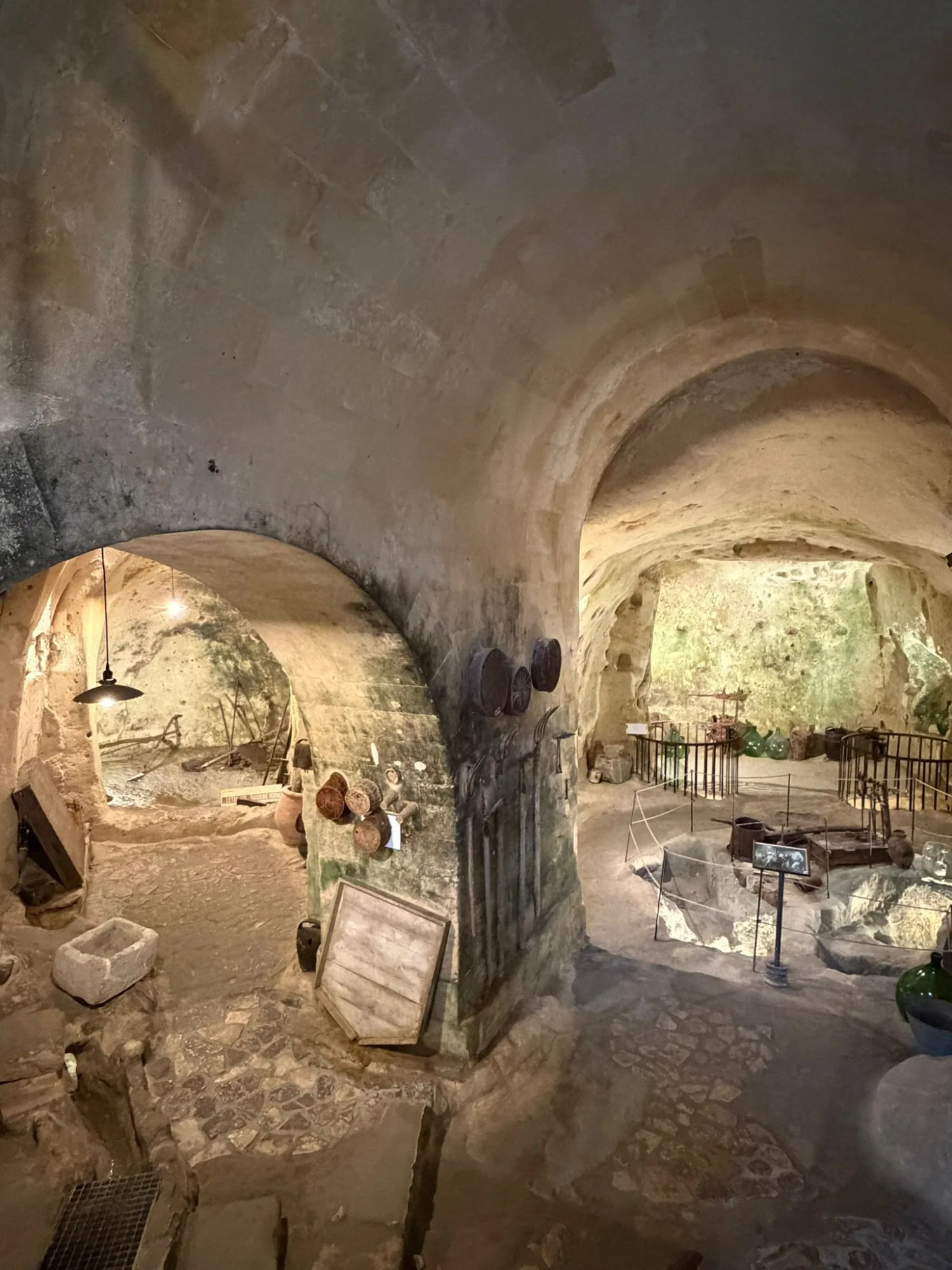
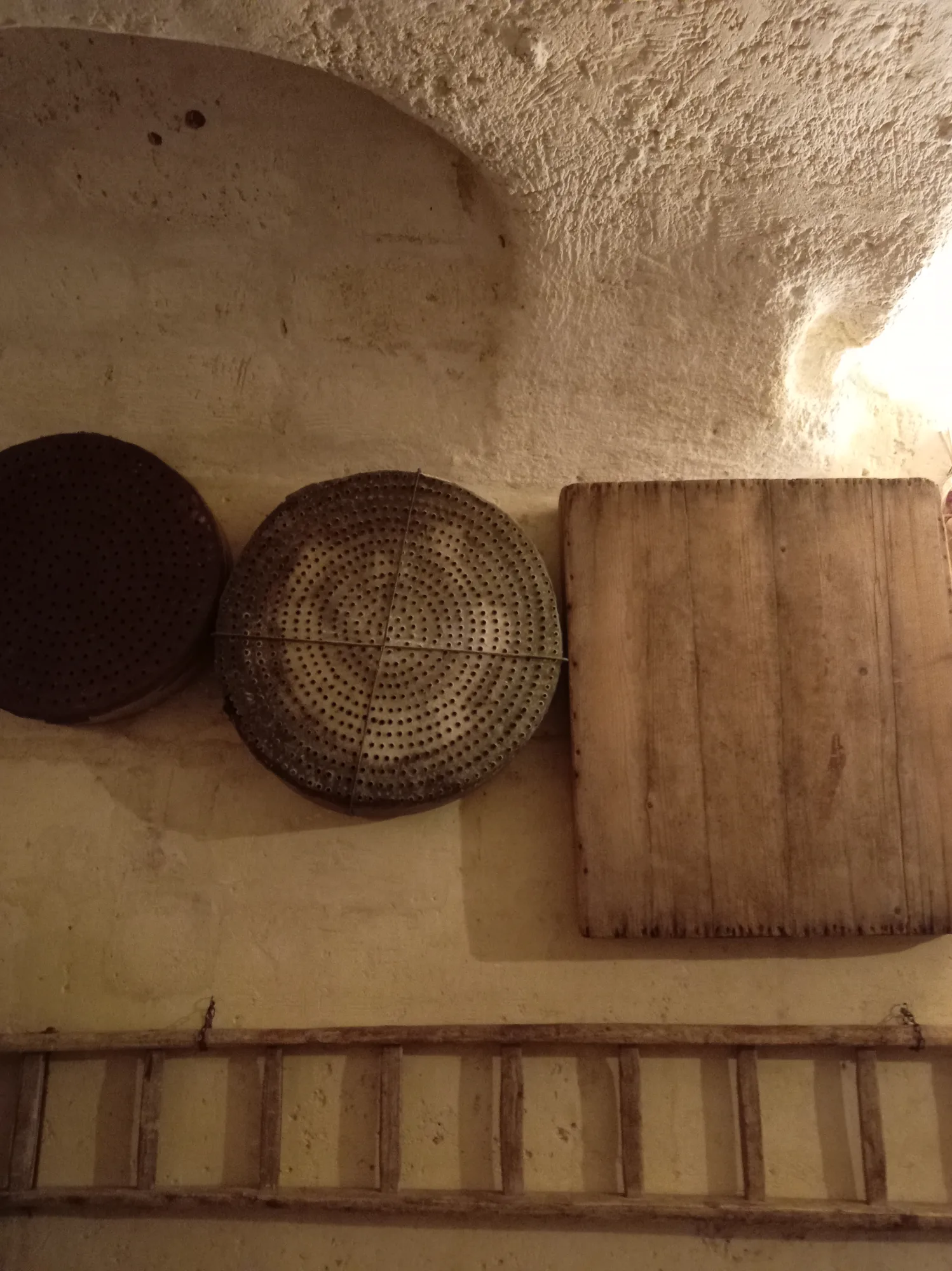
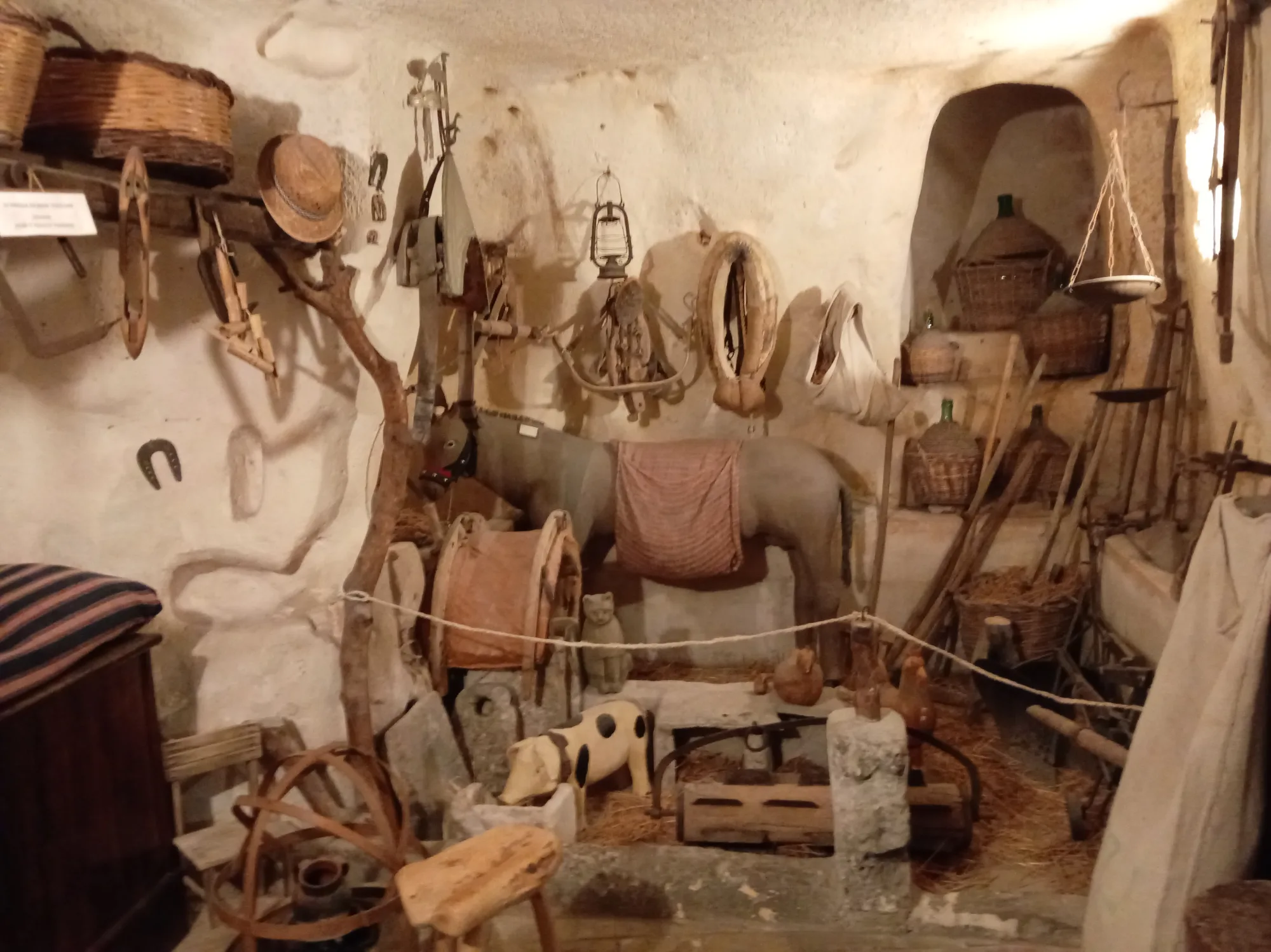
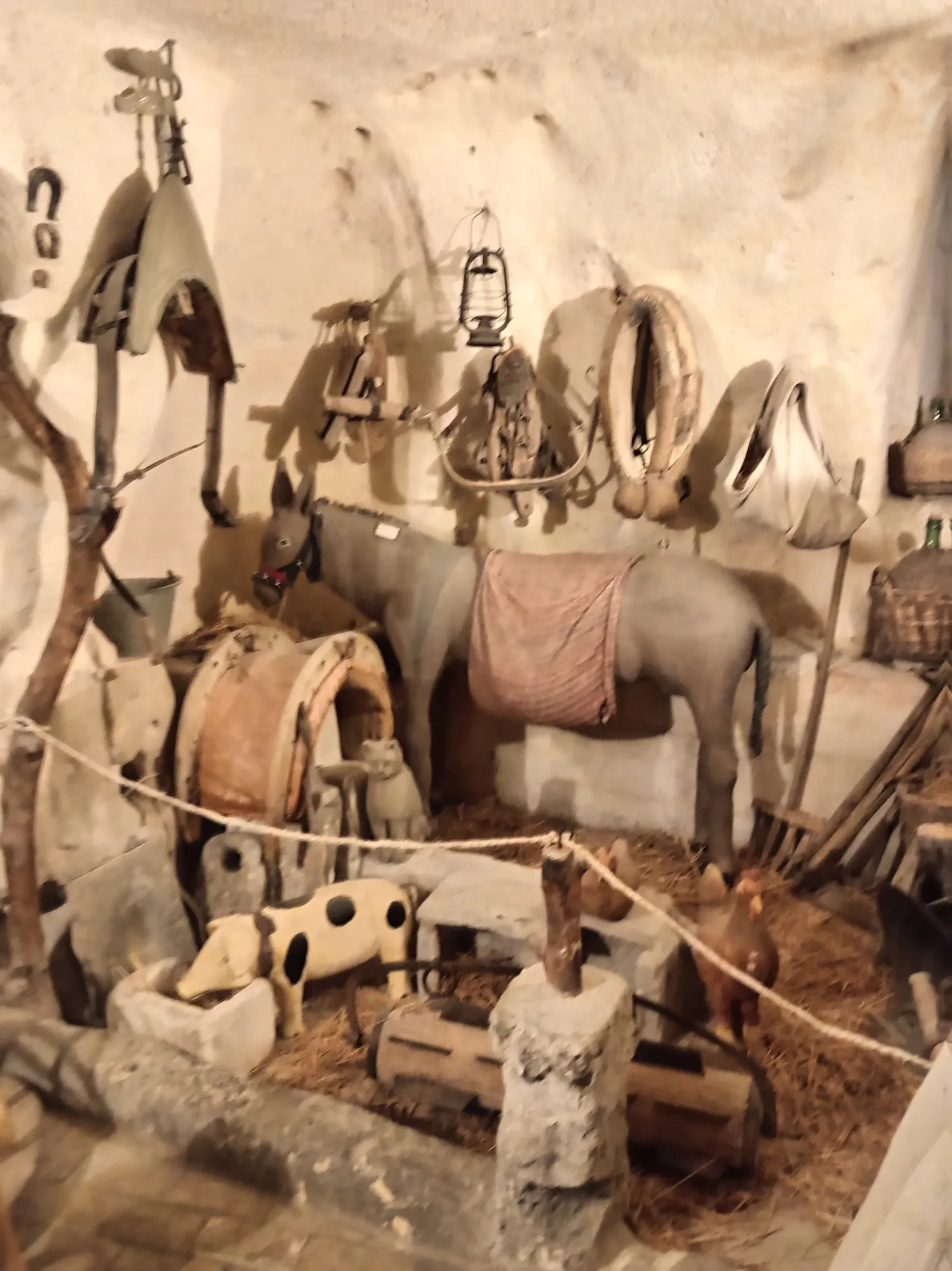
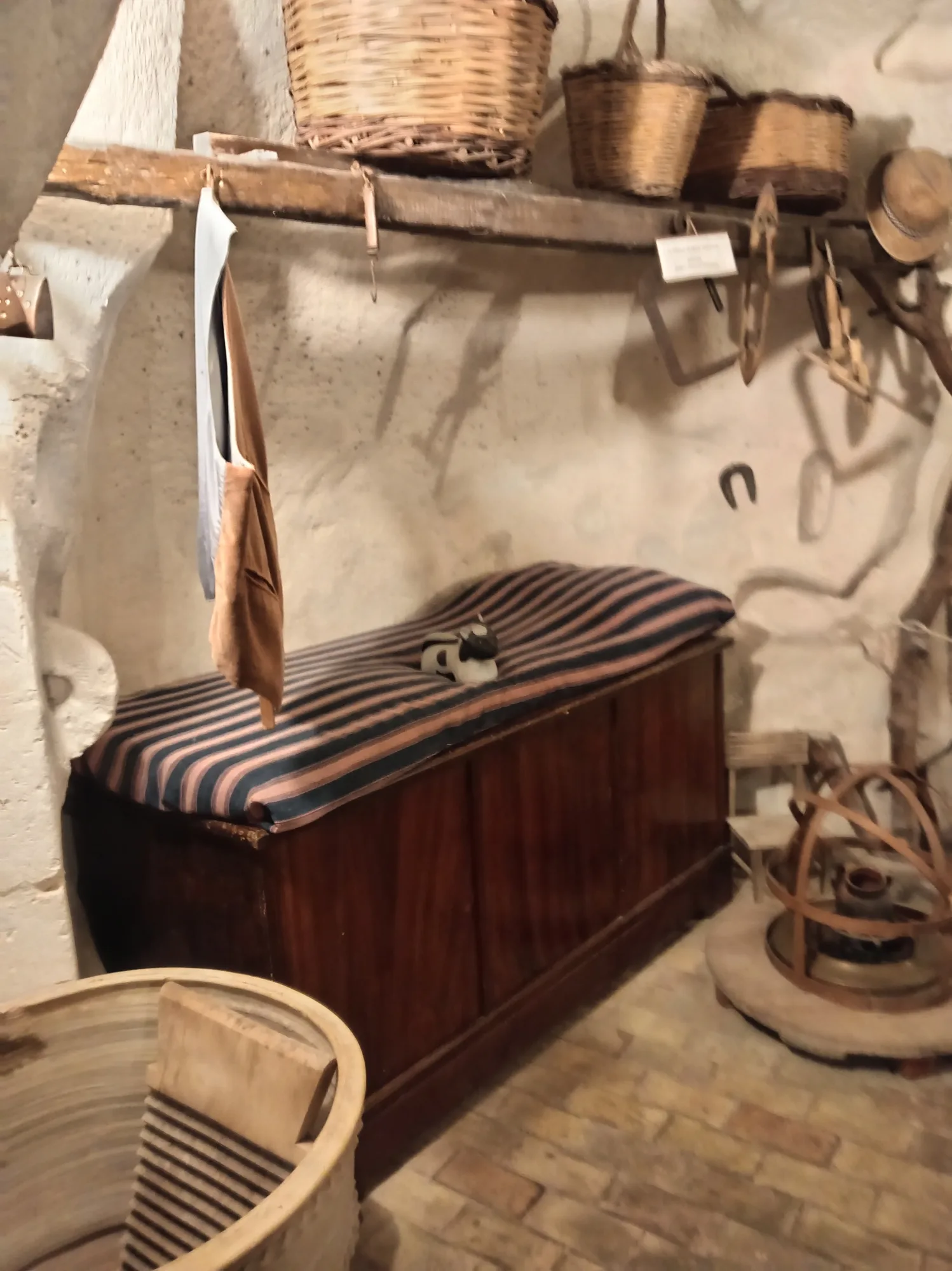
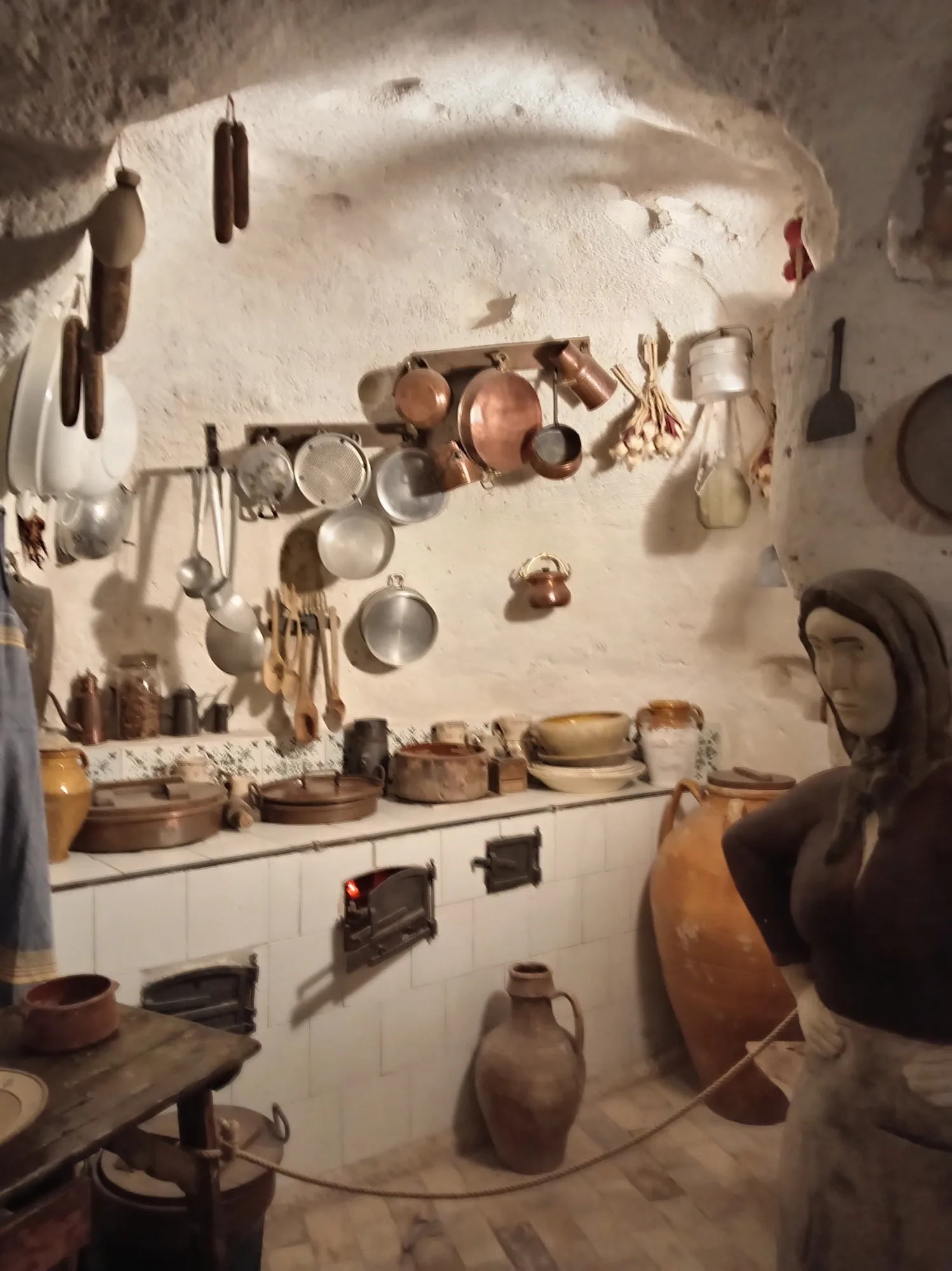
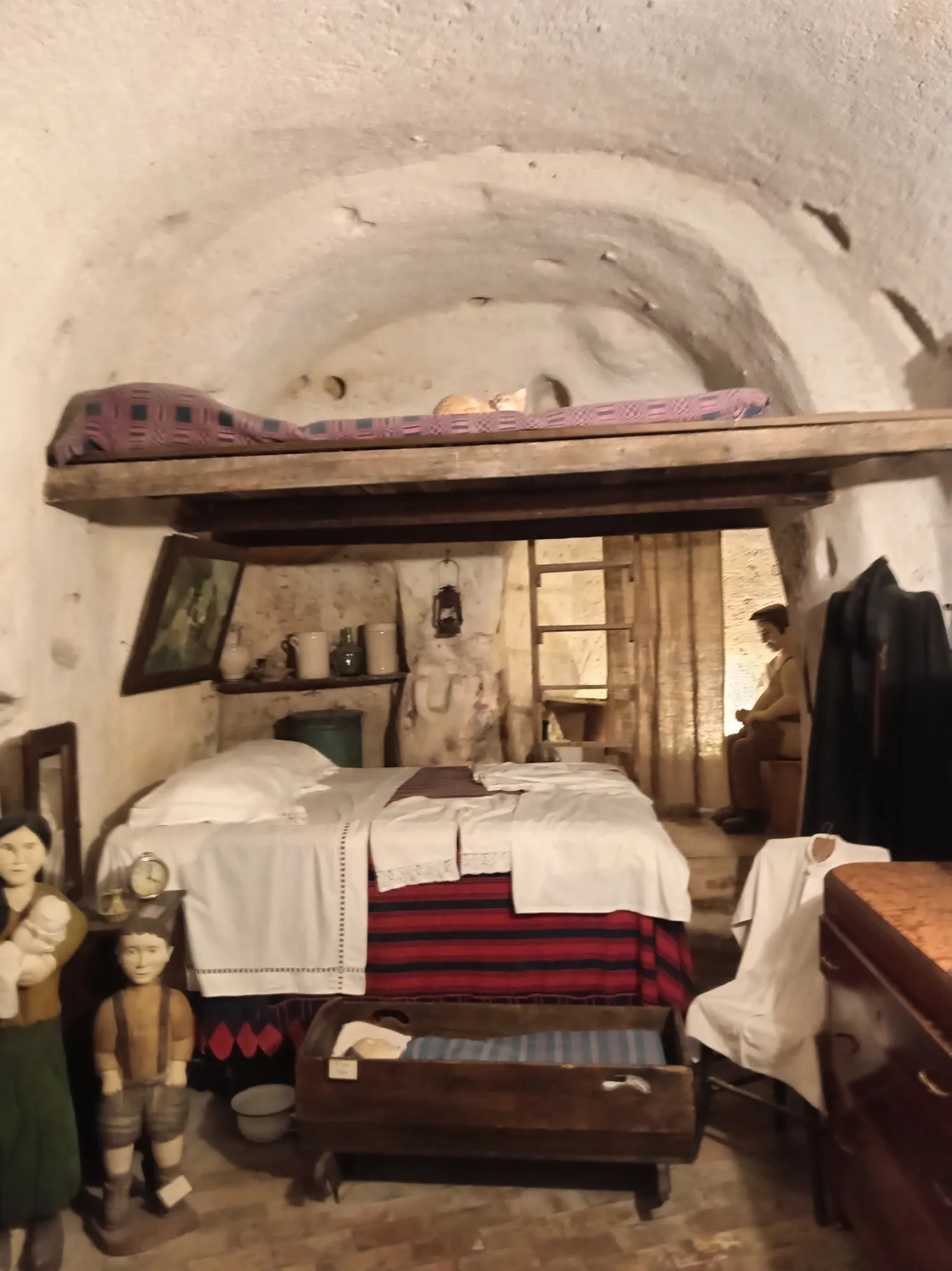
A furnished cave dwelling makes concrete what stays abstract in descriptions: how a family with children, a mule and chickens lived in a single room – right up to the 1950s.
What is shown
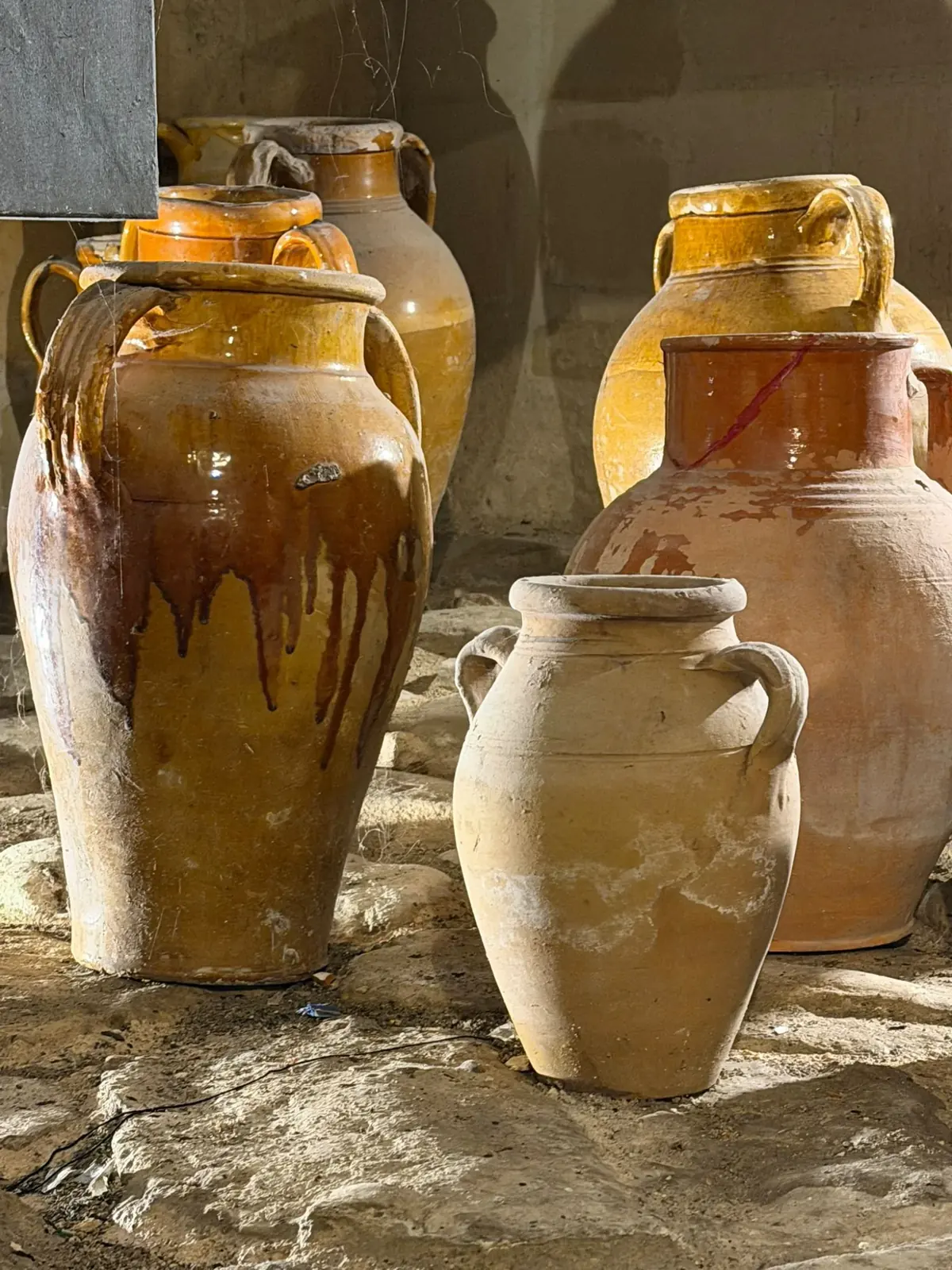
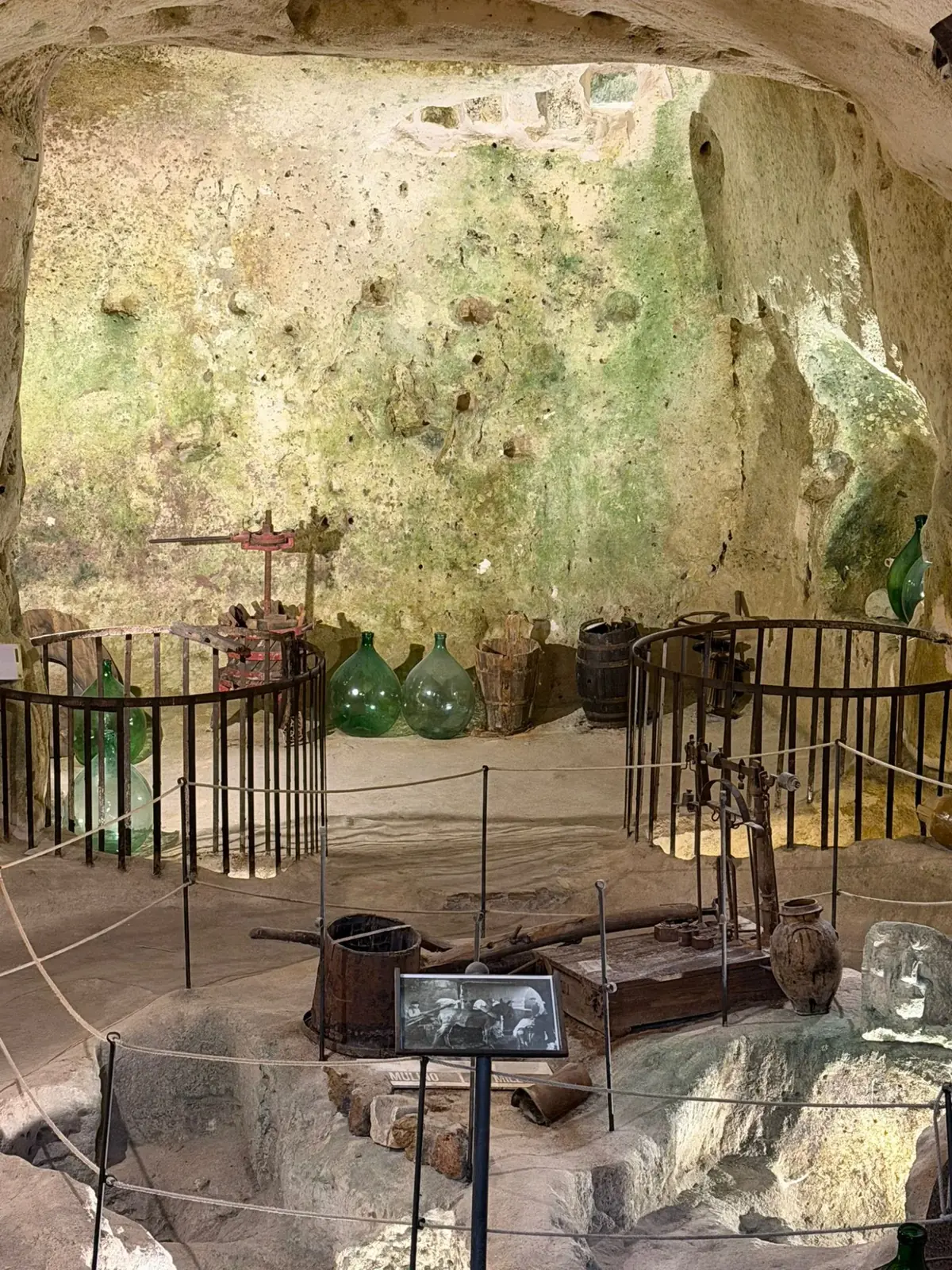
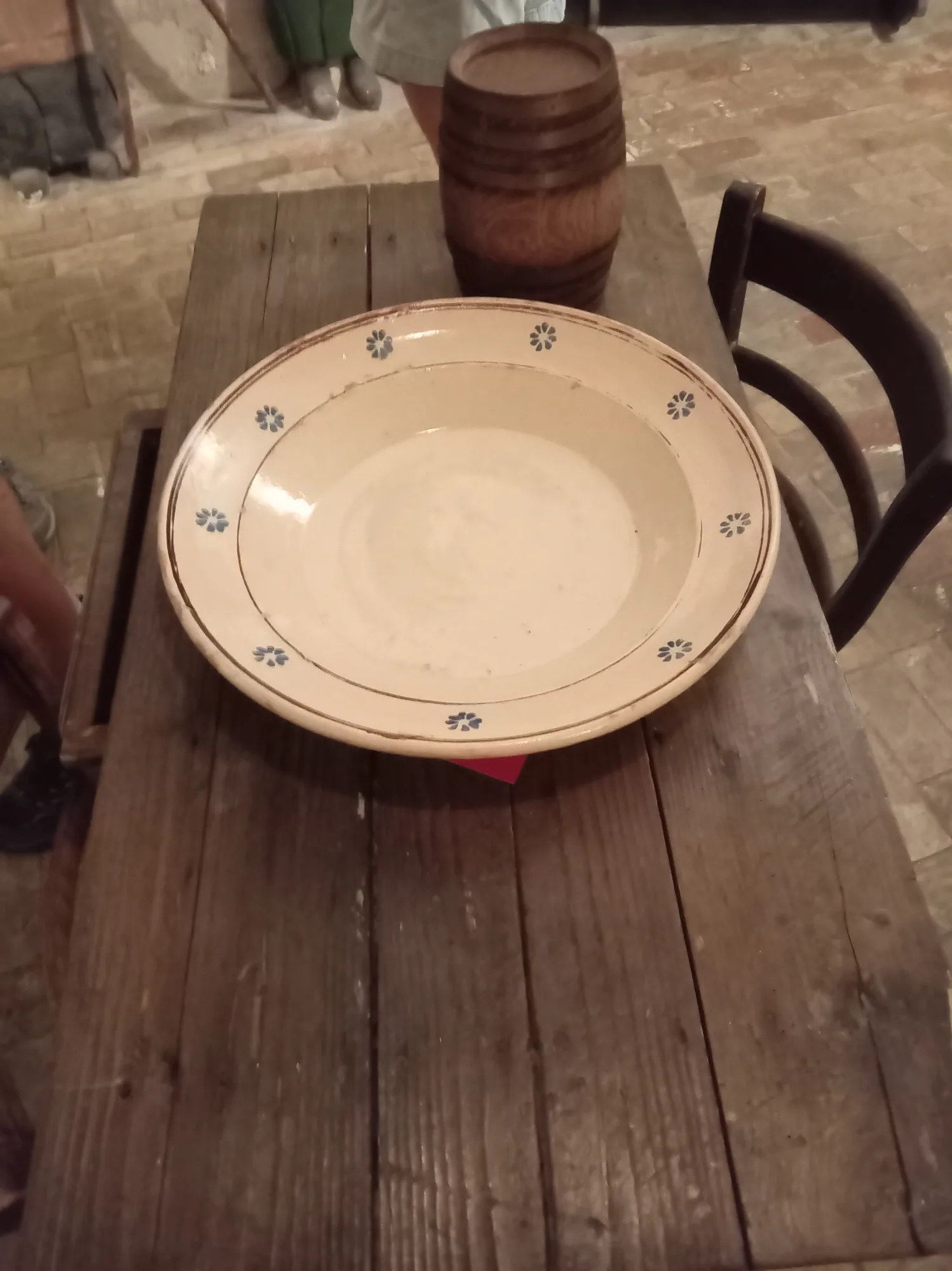
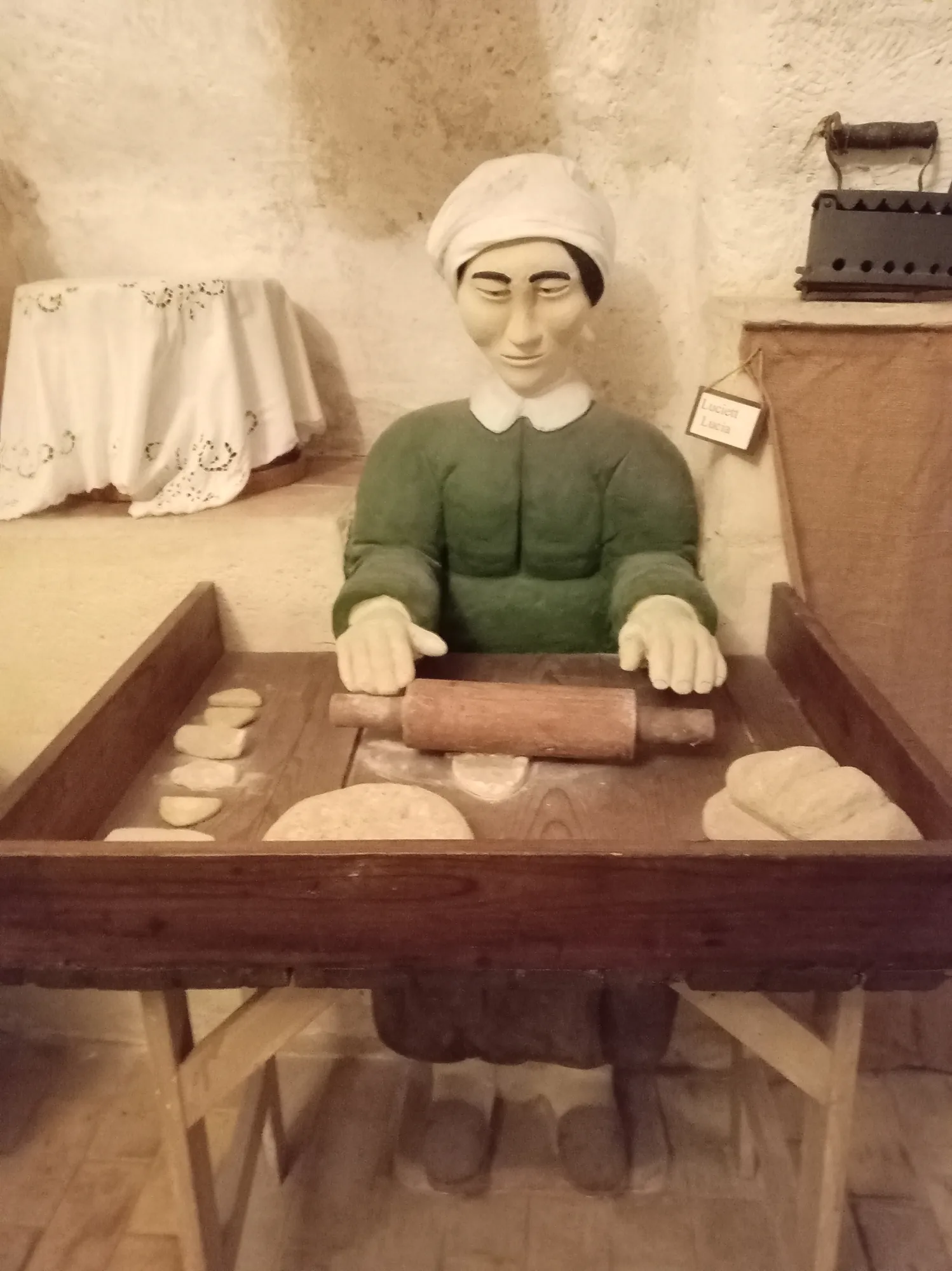
Several cave dwellings in the Sassi are set up as museums today, with the furniture and equipment that were normal until the clearance. The best known lies in the Sasso Caveoso near the church of San Pietro; another is in the Rione Casalnuovo. The furnishings come from the city’s own stock – beds, chests, a loom, crockery, tools.
One room for everything
The typical plan consists of a single deep room. At the front, where daylight falls, stood the bed and the chest; behind, in the dark, stores were kept and the animals stalled. The stable inside the living room was not a makeshift but part of the household economy: the mule was labour and capital in one, and its body heat helped to warm the room in winter.
The bed often stood high, with storage underneath; children slept in drawers or in niches in the wall. Where several generations lived together, the room was divided not by walls but by habit.
Cistern and smoke
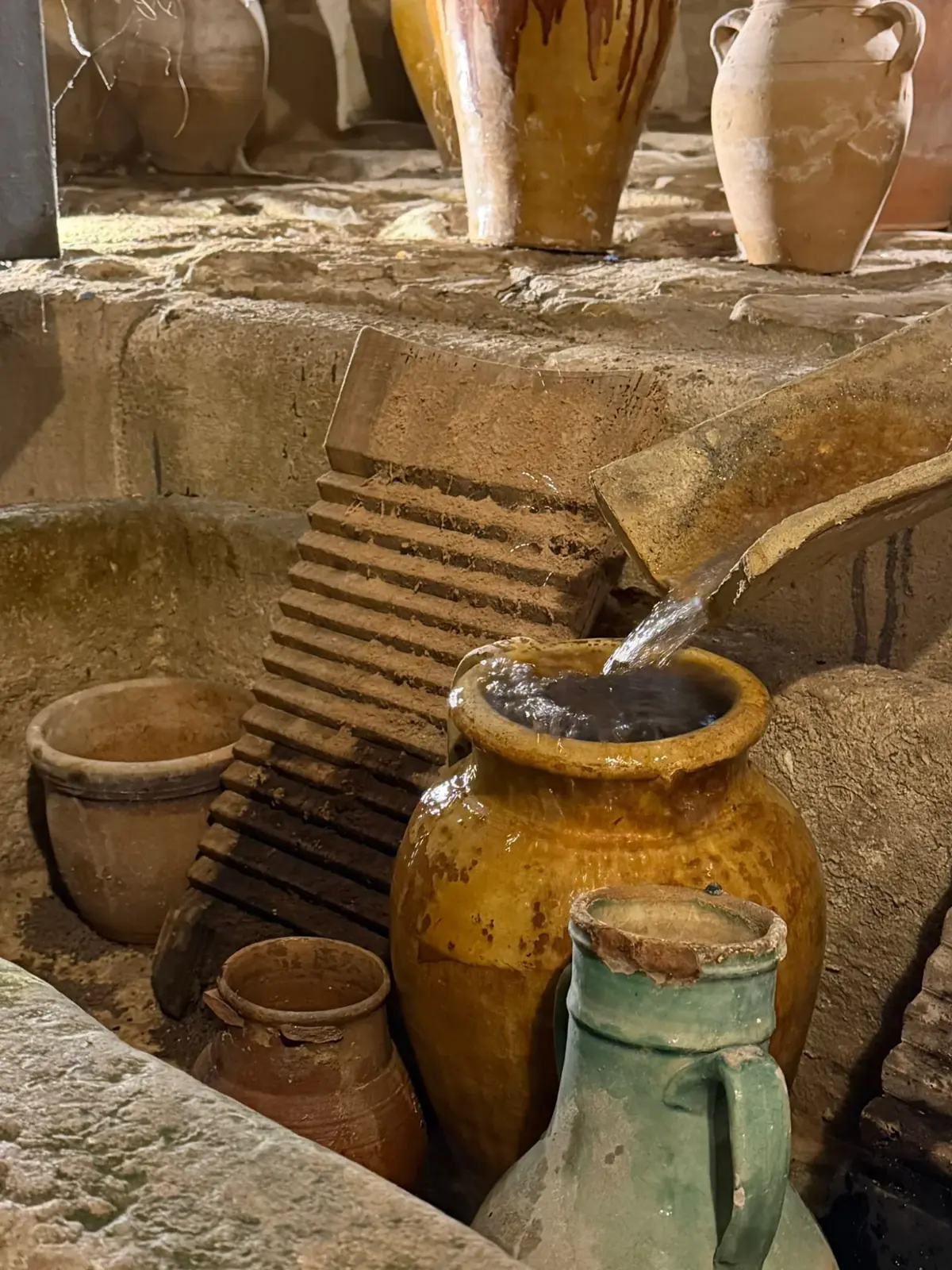
Almost every cave dwelling had its own small cistern, fed by rainwater from the roof or the terrace above. Cooking was done on an open fire and the smoke drew out through the door. Both explain part of the heavy burden of illness: contaminated water and bad air in a room without windows.
Why it is worth it
The tour takes only a few minutes but changes how you see the rest of the city. Walk through the lanes afterwards and you see a household in every doorway rather than a sight.
Combined with Casa Noha, where the resettlement is told, you get a complete picture – best in that order: first the story, then the room.
Read on
- The cave dwellings of the Sassi – the background to living in the rock
- Casa Noha – the history of the city in half an hour
- Sasso Caveoso – the district around it