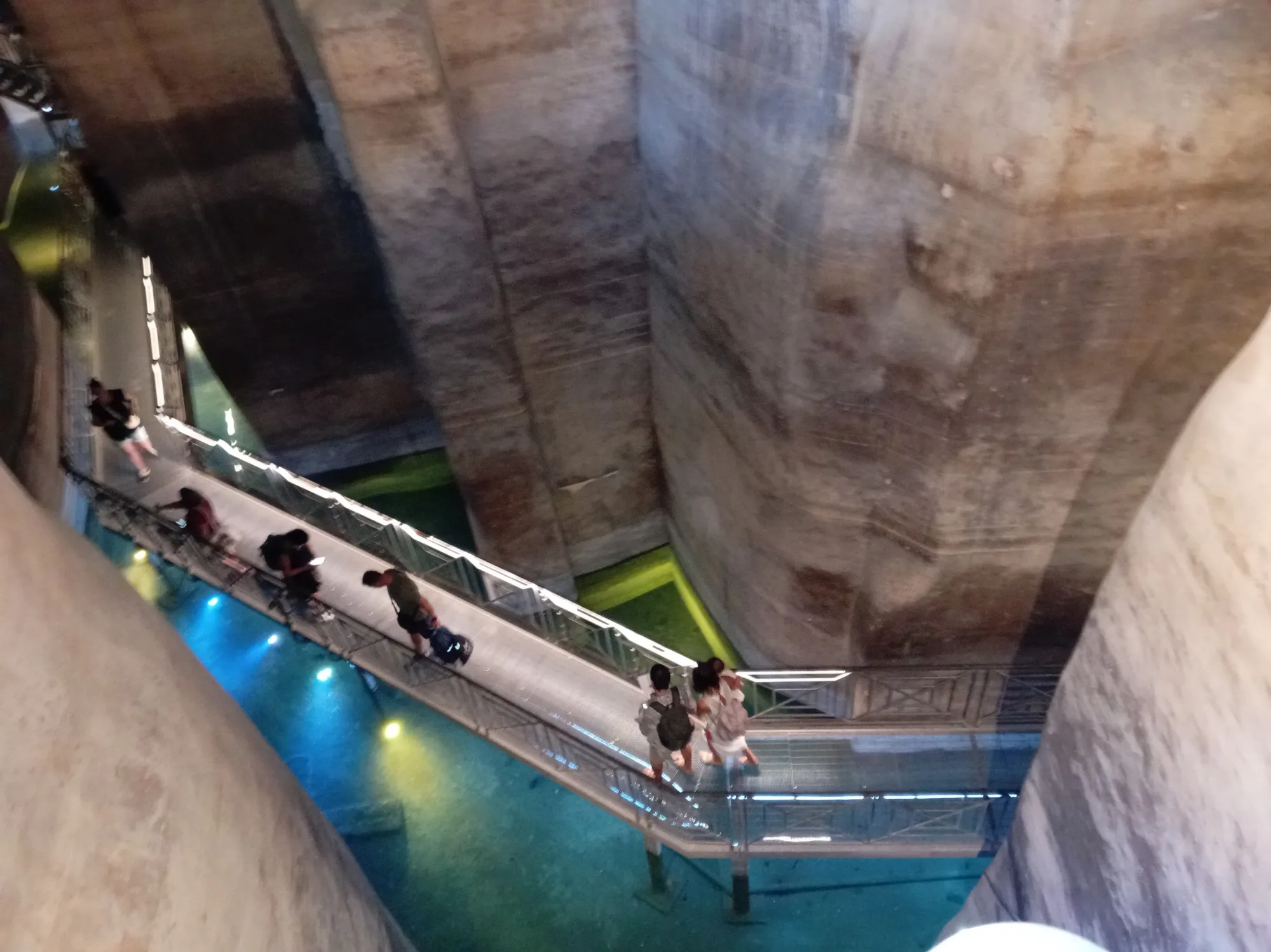
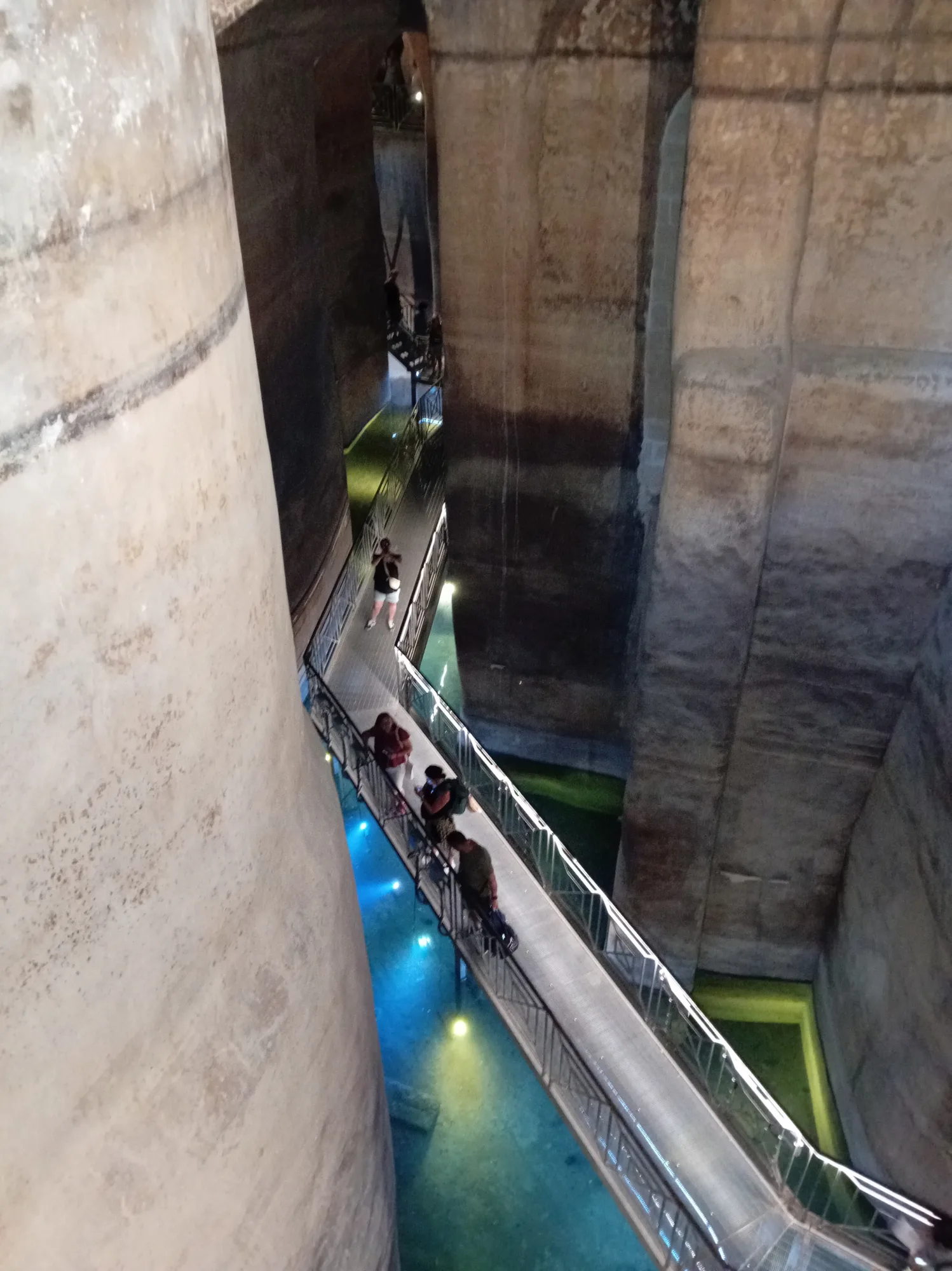
No cisterns, no city. How Matera got its water for thousands of years – and why the same system that made settlement possible became a problem in the twentieth century.
The basic problem
Matera sits on porous limestone. Rain seeps away, there are almost no springs, and the stream in the Gravina lies more than a hundred metres below the city – too far to carry water up every day. The answer was collection: whatever fell from the sky had to be caught and kept.
How they are built
Rainwater was led from roofs, terraces and channels into cisterns cut into the rock. The inner walls were coated with a waterproof render of lime and brick dust – the same technique the Romans used. Small settling basins in front of the inlet held back sand and dirt; they were emptied from time to time.
The usual form is bell-shaped: a narrow opening above, a wide belly below. That keeps evaporation down and makes the roof stable. Almost every cave dwelling had its own; larger cisterns supplied whole neighbourhoods.
The great exception
The Palombaro Lungo beneath Piazza Vittorio Veneto is the largest of these chambers and came about by joining and enlarging smaller stores. It can be walked into and shows the principle at a scale you cannot follow anywhere else.
From asset to hazard
As the population grew, the system was overloaded. Too many people shared too little water, the basins were cleaned less often, and waste water seeped into stores people drank from. Contaminated water contributed heavily to the burden of illness in the twentieth century and was among the reasons for clearing the Sassi.
Today
Many cisterns are accessible – as exhibition spaces, cellars, wine stores or hotel bathrooms. If you stay in the Sassi, there is a fair chance you are sleeping above one.
Read on
- Palombaro Lungo – the largest cistern in the city
- Hypogea beneath the square – what else lies under the main square
- Matera Sotterranea – guided routes through the underground