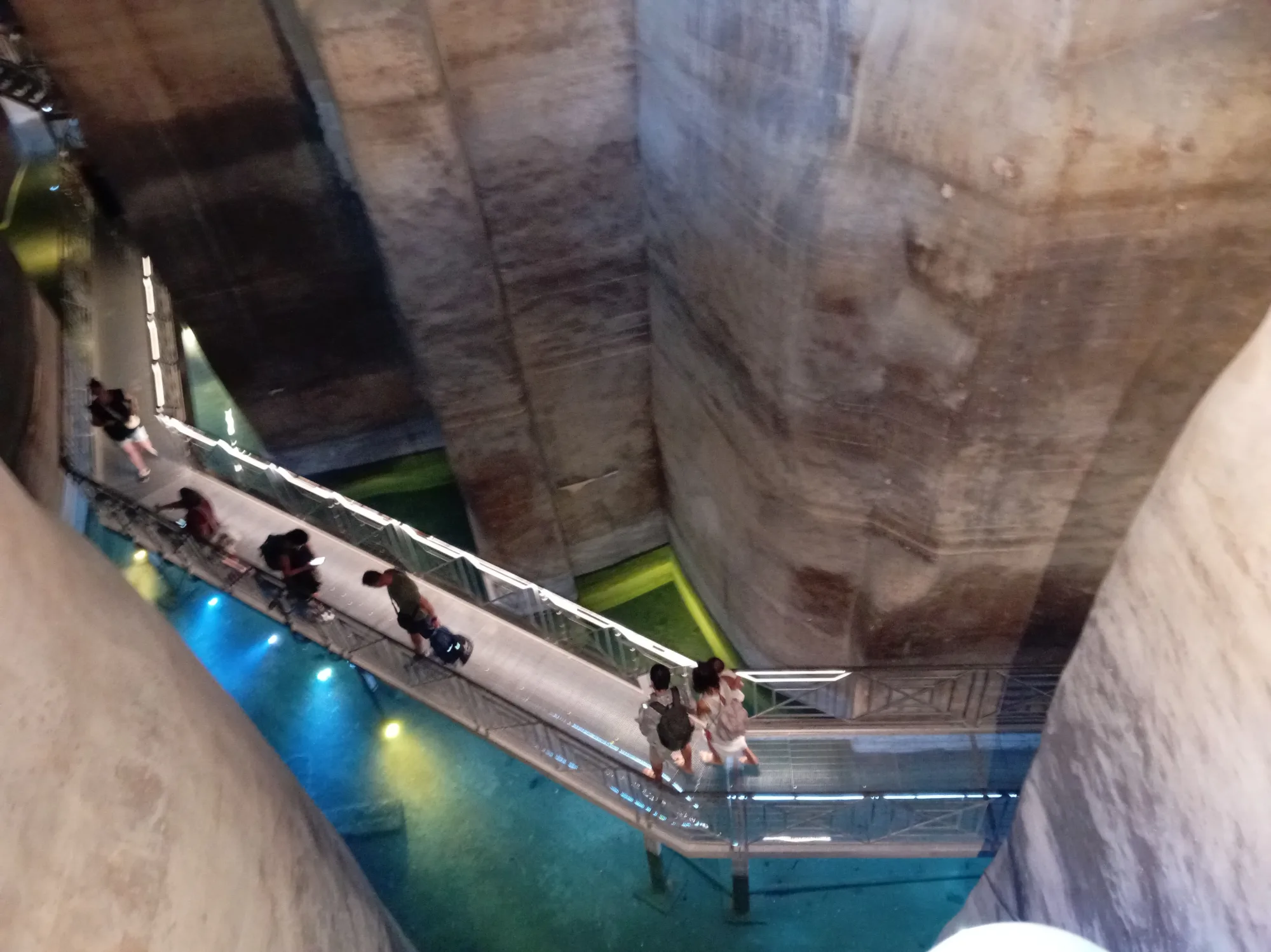
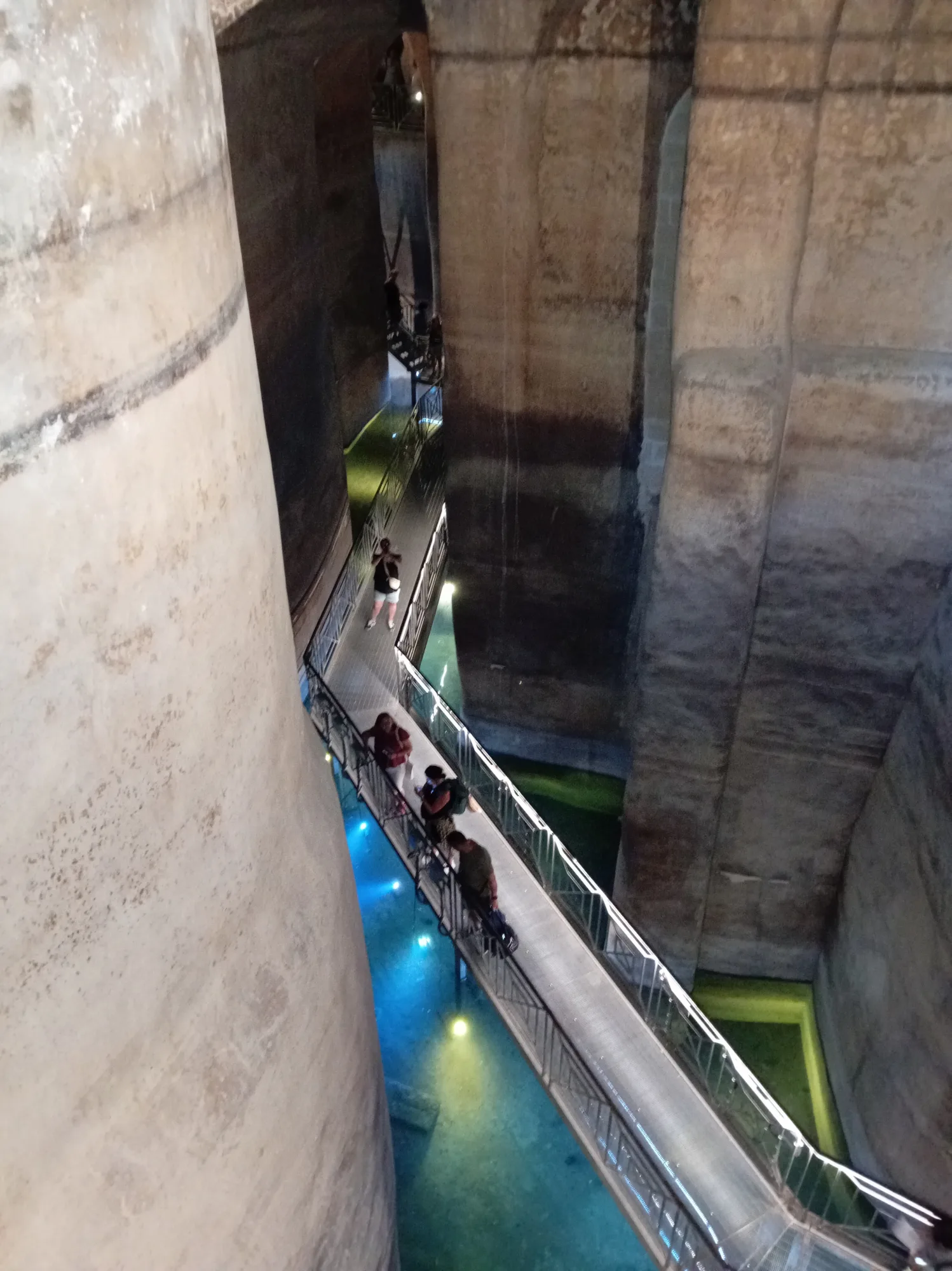
Beneath the central square of the upper town lies a water reservoir the size of a cathedral. The Palombaro Lungo was cut into the rock, supplied Matera with rainwater for generations and then fell so completely into oblivion that it was only found again during building work.
Why Matera is a city of cisterns
Matera sits on limestone, at the edge of a gorge, with no river and no reliable spring. Anyone who wanted to settle here had to catch and store rainwater. That is exactly what the inhabitants did for thousands of years: almost every house in the Sassi had its own water store, and there were large communal systems as well. The Palombaro Lungo is the largest of them – and the reason a city could arise at this dry spot at all.
How the Palombaro Lungo came about
The system was not built in one go. Older, smaller cisterns were gradually enlarged, joined to one another and finally merged into a single space. You can read this from the pillars left standing to carry the ceiling: they mark the boundaries of the earlier chambers. The walls are coated with a waterproof render so that the collected water does not seep away into the porous limestone.
Forgotten and rediscovered
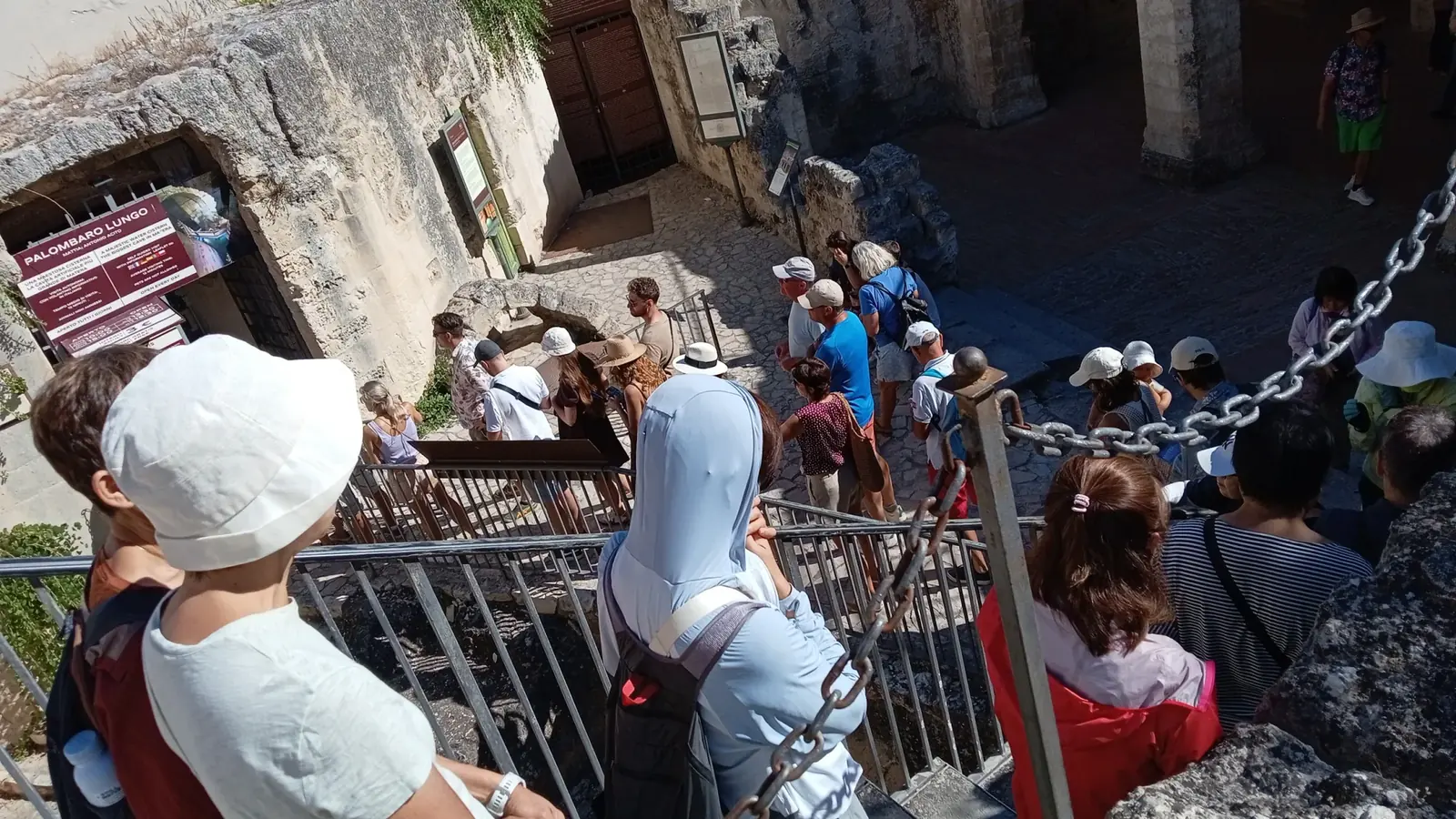
When Matera was connected to a modern water main, the reservoir lost its purpose. It was sealed and vanished from the city’s memory. Only during works on Piazza Vittorio Veneto did anyone come across the cavity beneath the paving again. Today a staircase leads down from the edge of the square.
What you see on a visit
Walkways run where the water once stood. From them you can make out the chisel marks on the walls – hewn out of the rock by hand, blow by blow – and the dark lines the water level left behind over the years. The space is high, narrow and completely silent; every sound takes a moment to fade away.
The visit does not take long, but it explains better than any text why people here went to so much trouble over water.
Location, access and what to bring
The entrance is on Piazza Vittorio Veneto, in the middle of the upper town and a few steps from Via Ridola. You go down a staircase; the site is not step-free. Below it is noticeably cooler than above – even in high summer a light jacket makes sense, and sturdy shoes too, because the walkways can be damp.
Nearby
- Hypogea beneath Piazza Vittorio Veneto – more cavities under the same square
- The cisterns of the Sassi – how water supply worked in the residential districts
- Matera Sotterranea – tours through the underground city
- Piazza Vittorio Veneto – the square above the cistern