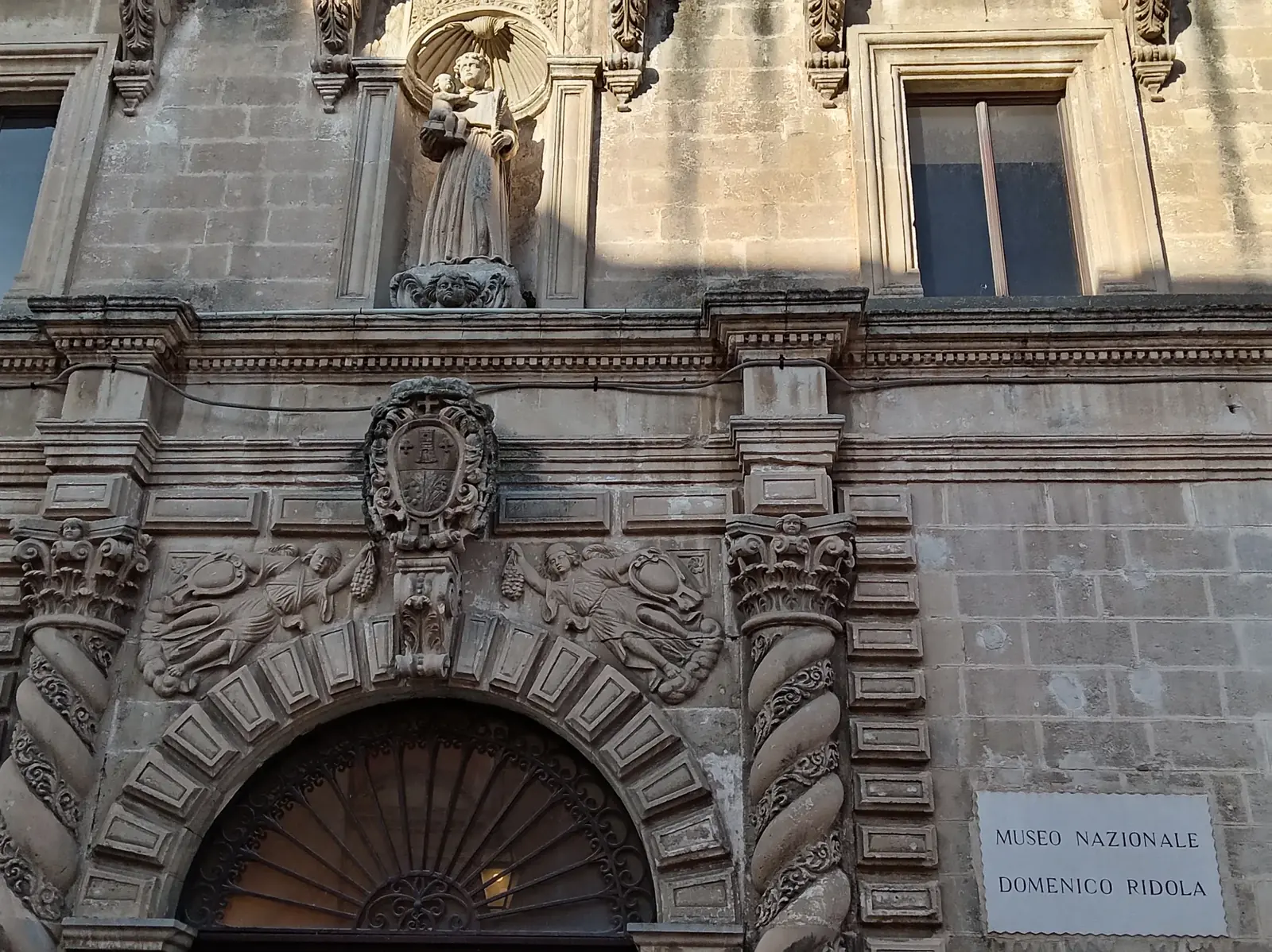
The city’s archaeological museum: finds from prehistory and from the Greek period – and the explanation for what lies in the ground on the plateau opposite.
Collection and collector
The Museo Ridola stands on the street of the same name in a former monastery building. The core of the collection consists of the finds of the physician Domenico Ridola, who excavated in the surrounding country in the nineteenth century and gave his collection to the state. That a country doctor became the founder of a whole region’s archaeology is not unusual for nineteenth-century Italy – and it is why the house carries his name.
What is shown
Stone tools and pottery from prehistoric settlements of the Murgia, grave goods from the Iron Age, and vases and weapons from the time of the Greek colonies on the Ionian coast. The painted vessels in particular show how closely this area was tied to the Greek cultural sphere, long before Rome mattered.
Why it is worth it
The museum explains what the walk across the plateau only hints at: that people have settled here for thousands of years, long before the first caves of the Sassi. If you have been to the Neolithic village on the Murgia, the finds are here – and conversely, after the museum you see more in the terrain than you did before.
Setting
Via Ridola is the museum street of the upper town; Chiesa del Purgatorio and Palazzo Lanfranchi are a few steps away. The street is level – the right choice for a museum day without steps.
Read on
- Via Ridola – the street with the highest density of museums
- Neolithic village Murgia Timone – the find site on the plateau
- Parco della Murgia Materana – the landscape it belongs to