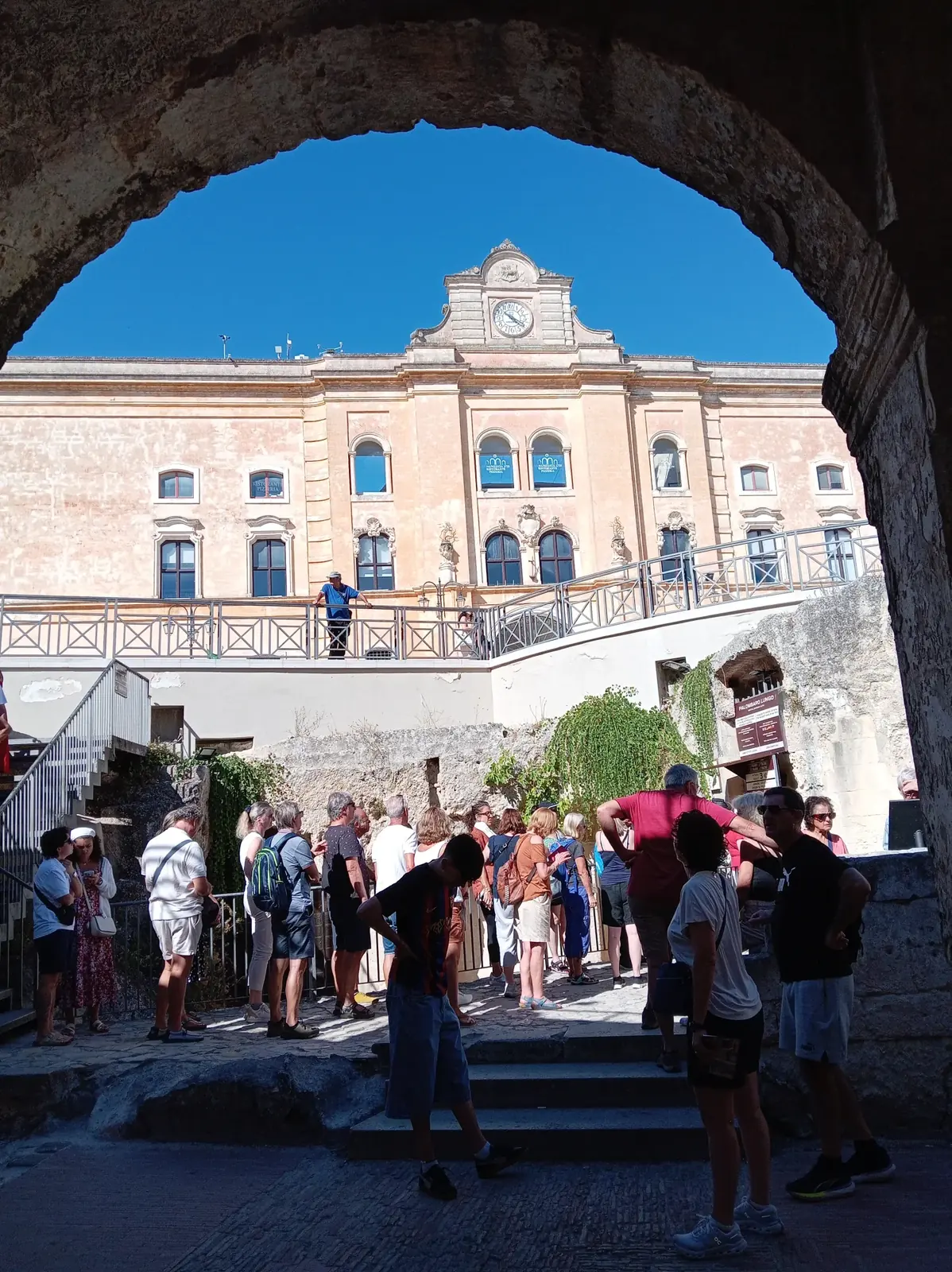
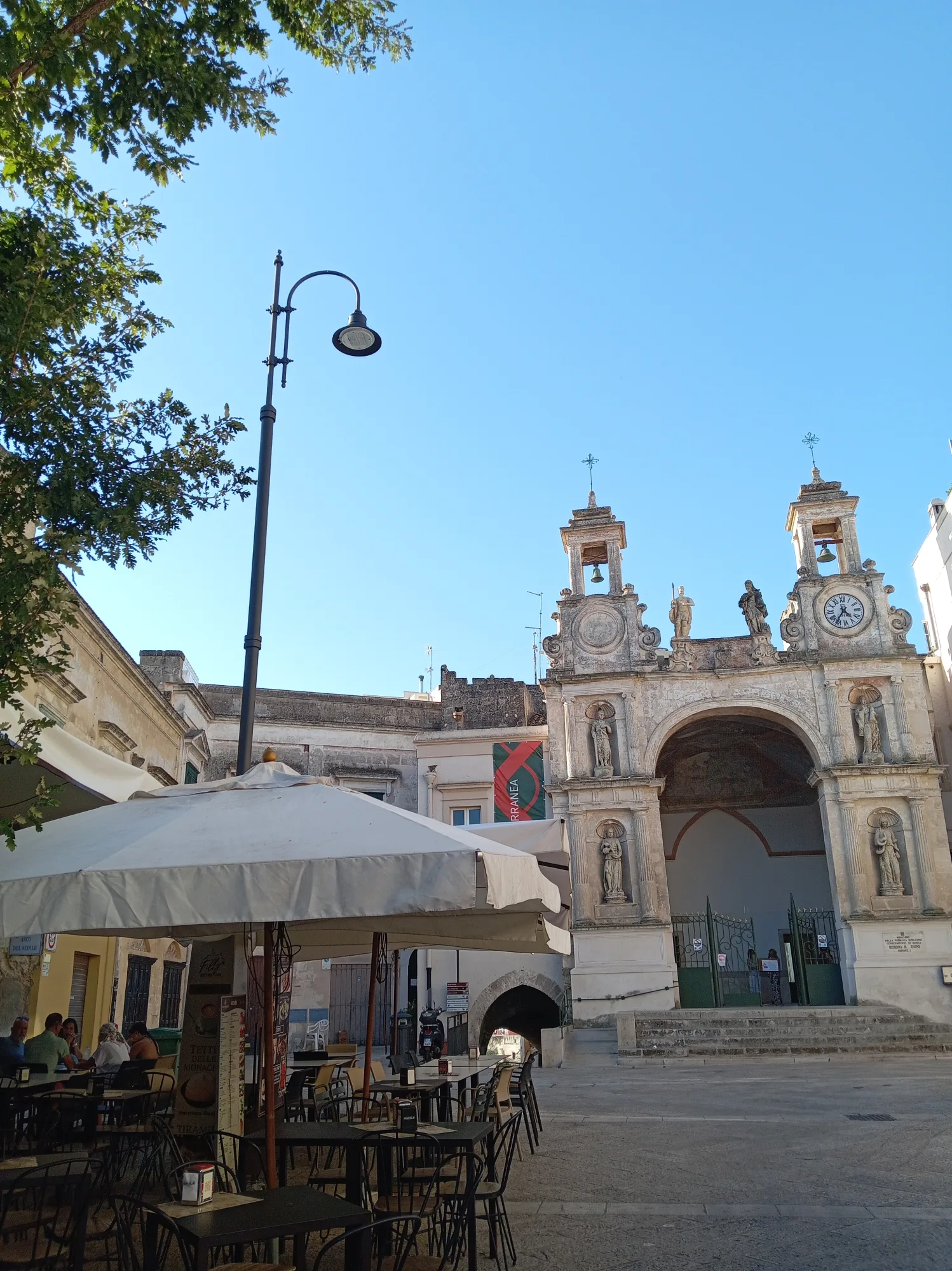
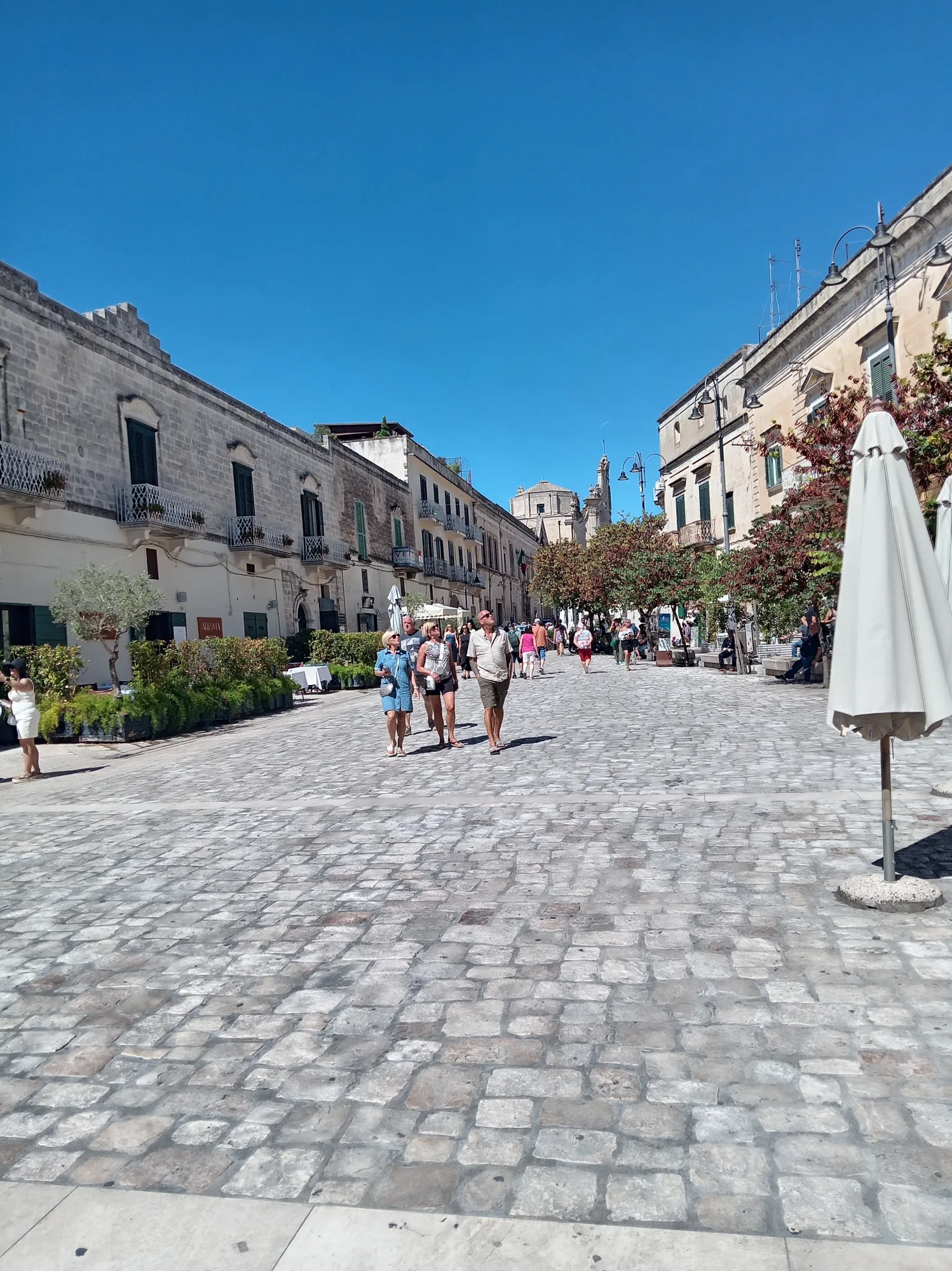
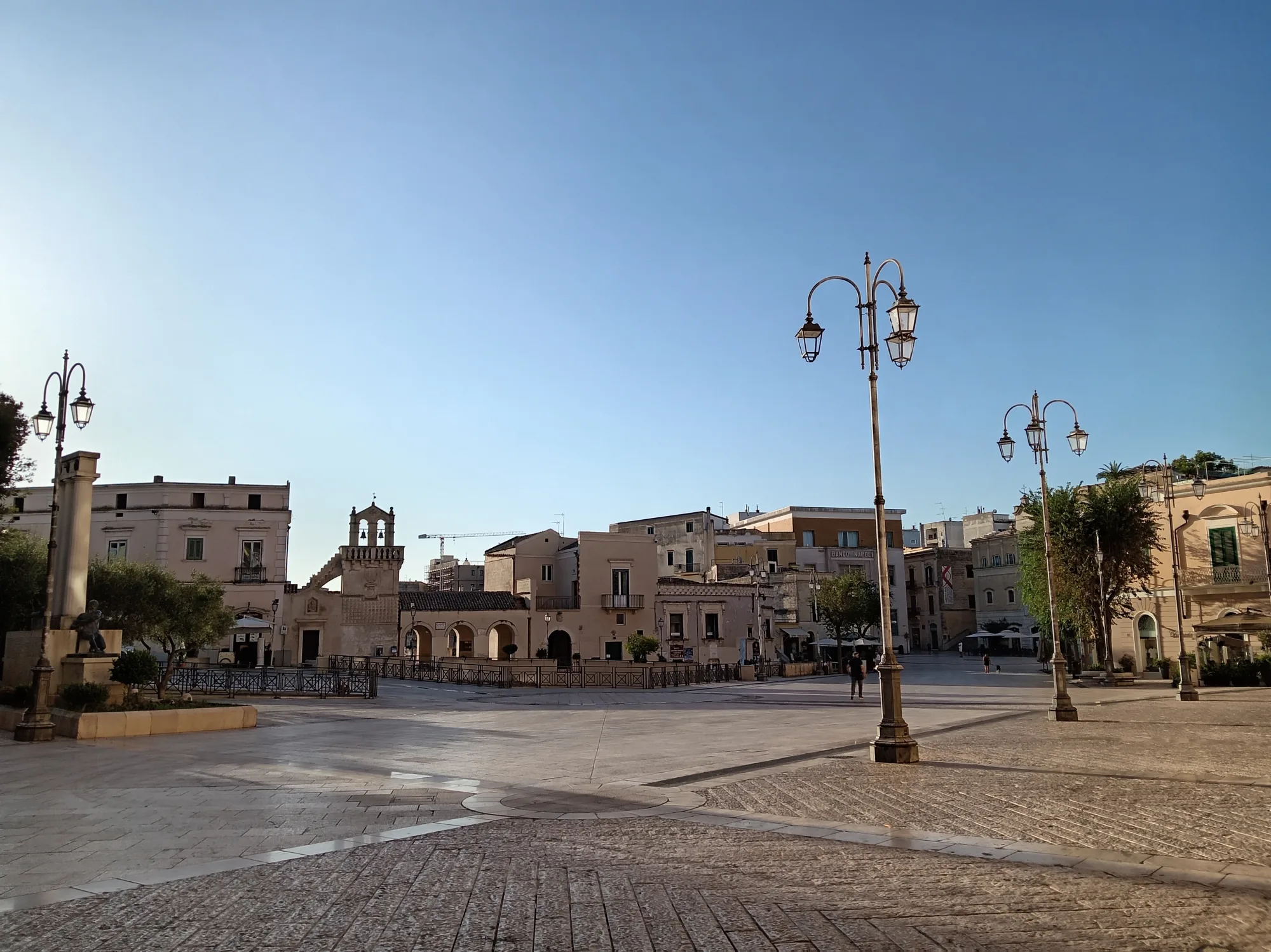
Above the Sassi lies the upper town: squares, palaces and churches from a time when Matera no longer built in caves. Only both levels together make the city.
Two levels
Matera’s historic centre has two parts. Below the two Sassi, cut into the rock and grown over millennia. Above, on the plateau, the upper town with its masonry houses, squares and noble palaces – built when the city detached itself from the slope and carried on across level ground.
The boundary between the two is not a line but an edge. In many places you stand with one foot in the upper town and look over a parapet straight down onto roofs that are at the same time courtyards.
The axis
From Piazza Vittorio Veneto a sequence of squares leads to Piazza del Sedile and on along Via Duomo to the Civita and the cathedral. Walk that line and you have crossed the upper town in twenty minutes – standing at every second point in front of a staircase leading down into the Sassi.
That is the simplest way to find your bearings in Matera: one main axis on top, from which everything else branches off. There is an overview of the paths below on the page The lanes of the Sassi.
What is different up here
The upper town was never cleared. While the Sassi stood empty for decades, life carried on here: shops, cafés, administration, flats. You still notice it in the traffic on the squares, especially in the early evening when the whole city comes out to walk.
For visitors that means a difference in character: below you walk through a monument, above through a city.
What stands here
The most important buildings of the upper town have their own pages – the churches, the palaces and the museums, most of which are up here. The densest stretch is Via Ridola.
Read on
- The Sassi di Matera – the level below
- Piazza Vittorio Veneto – the start of the axis
- Castello Tramontano – the hill above the upper town