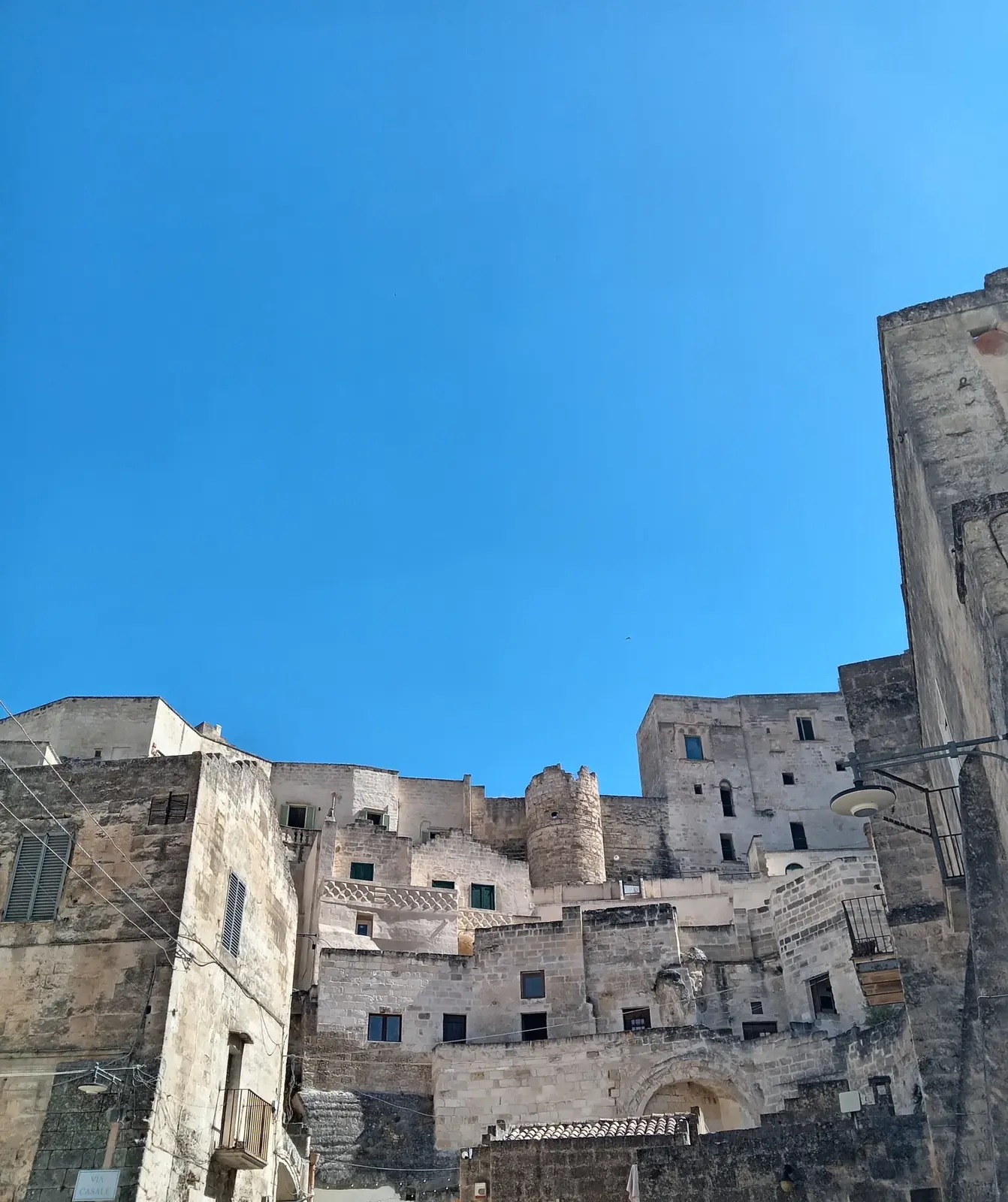
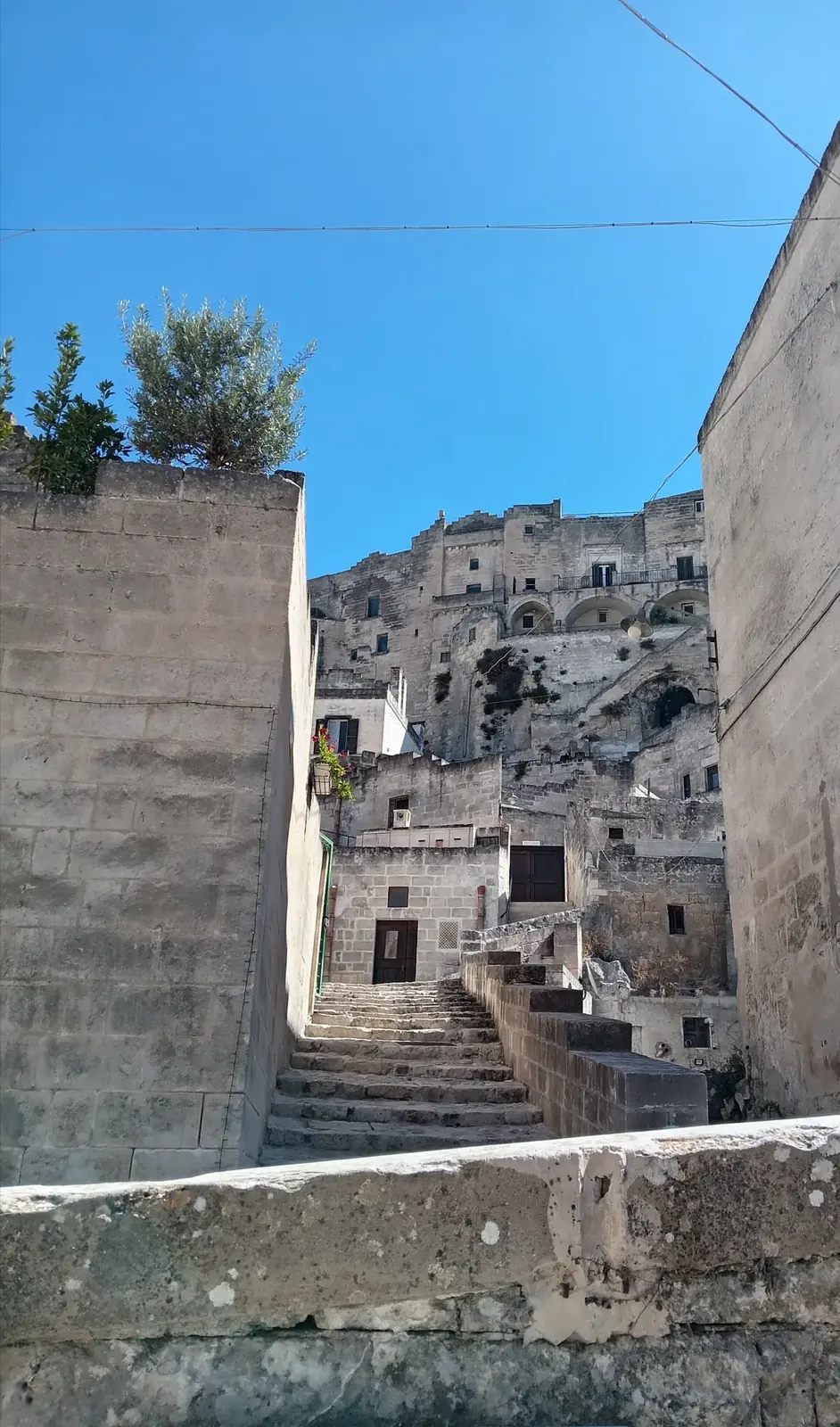
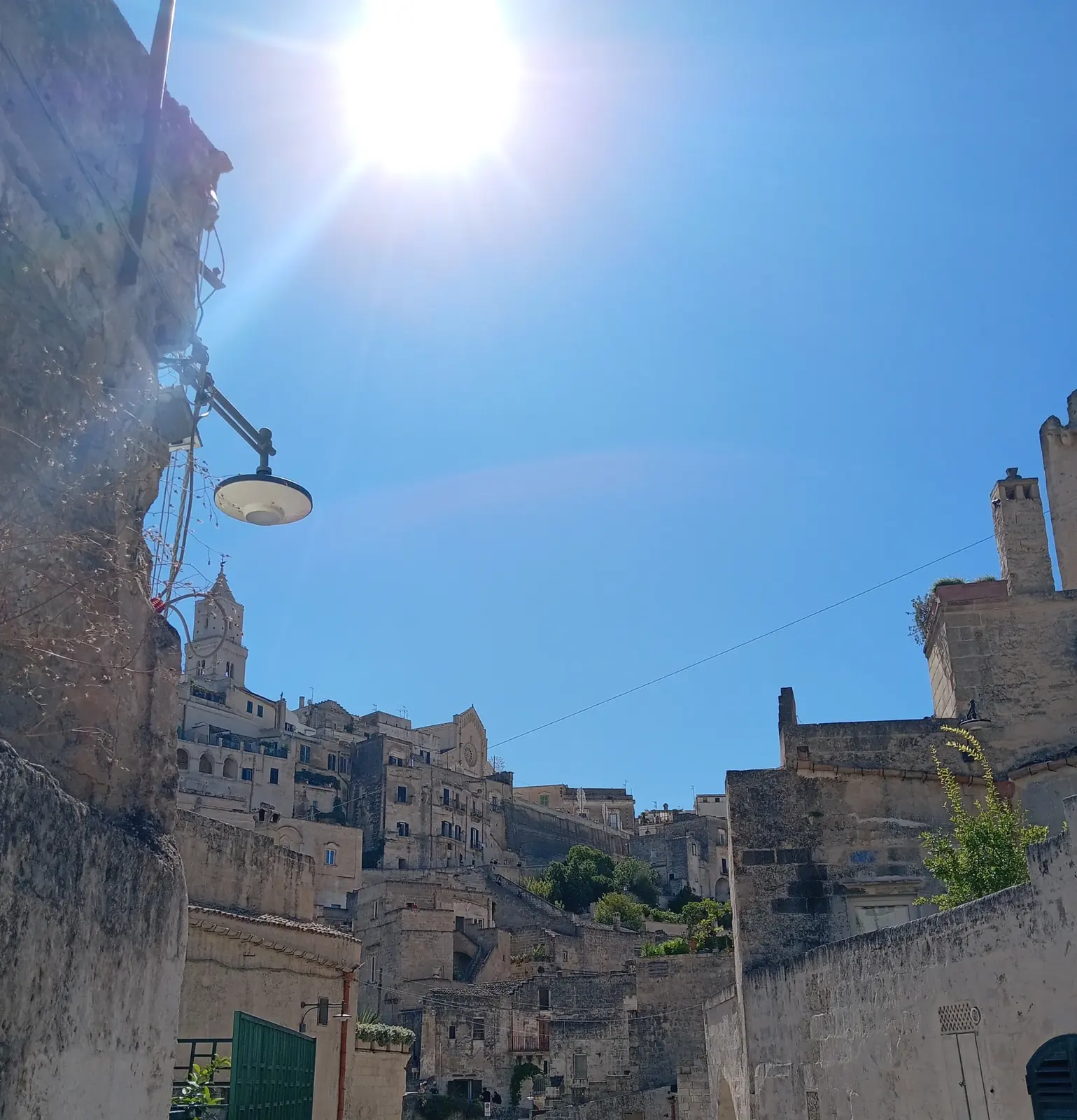
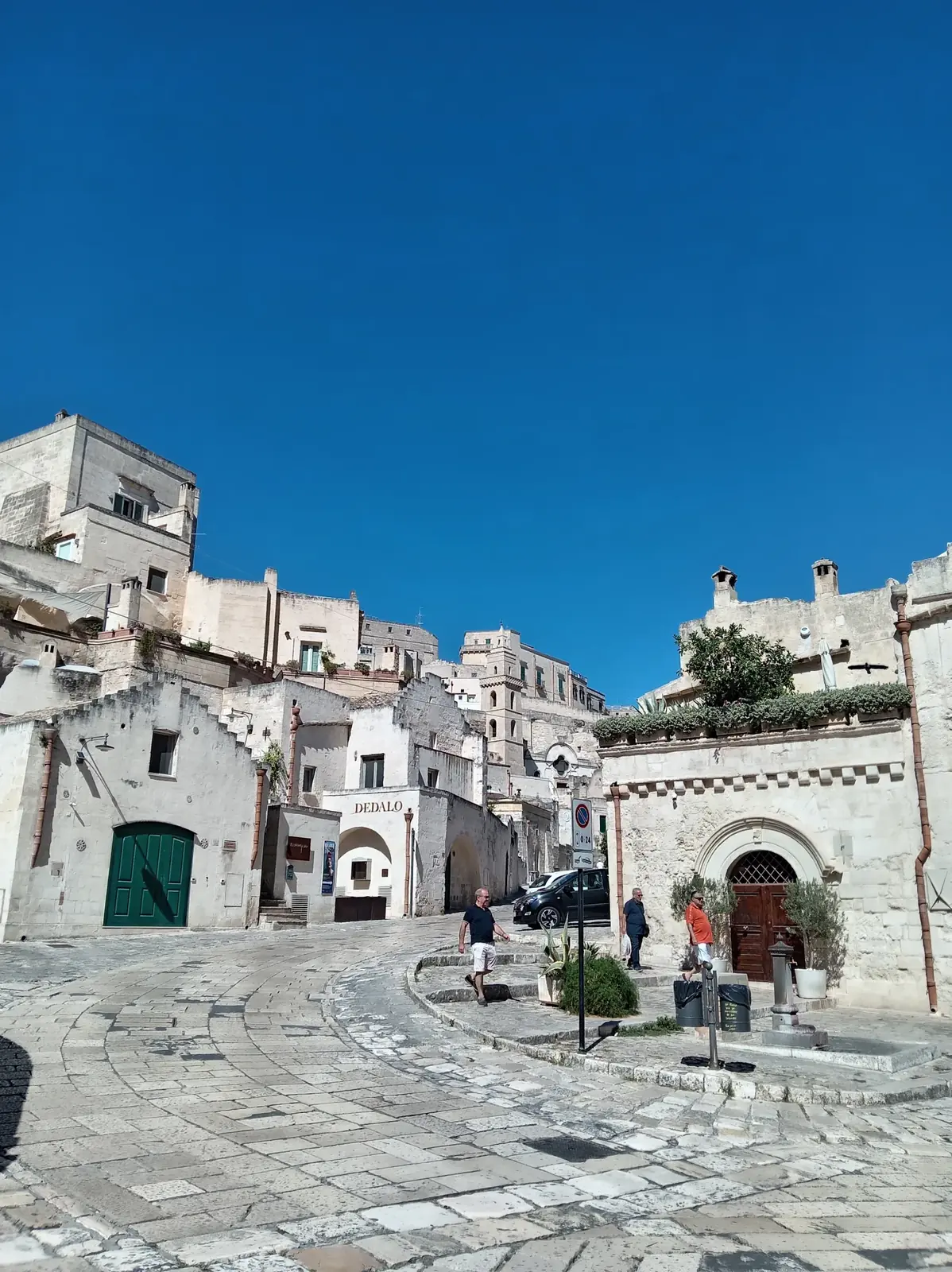
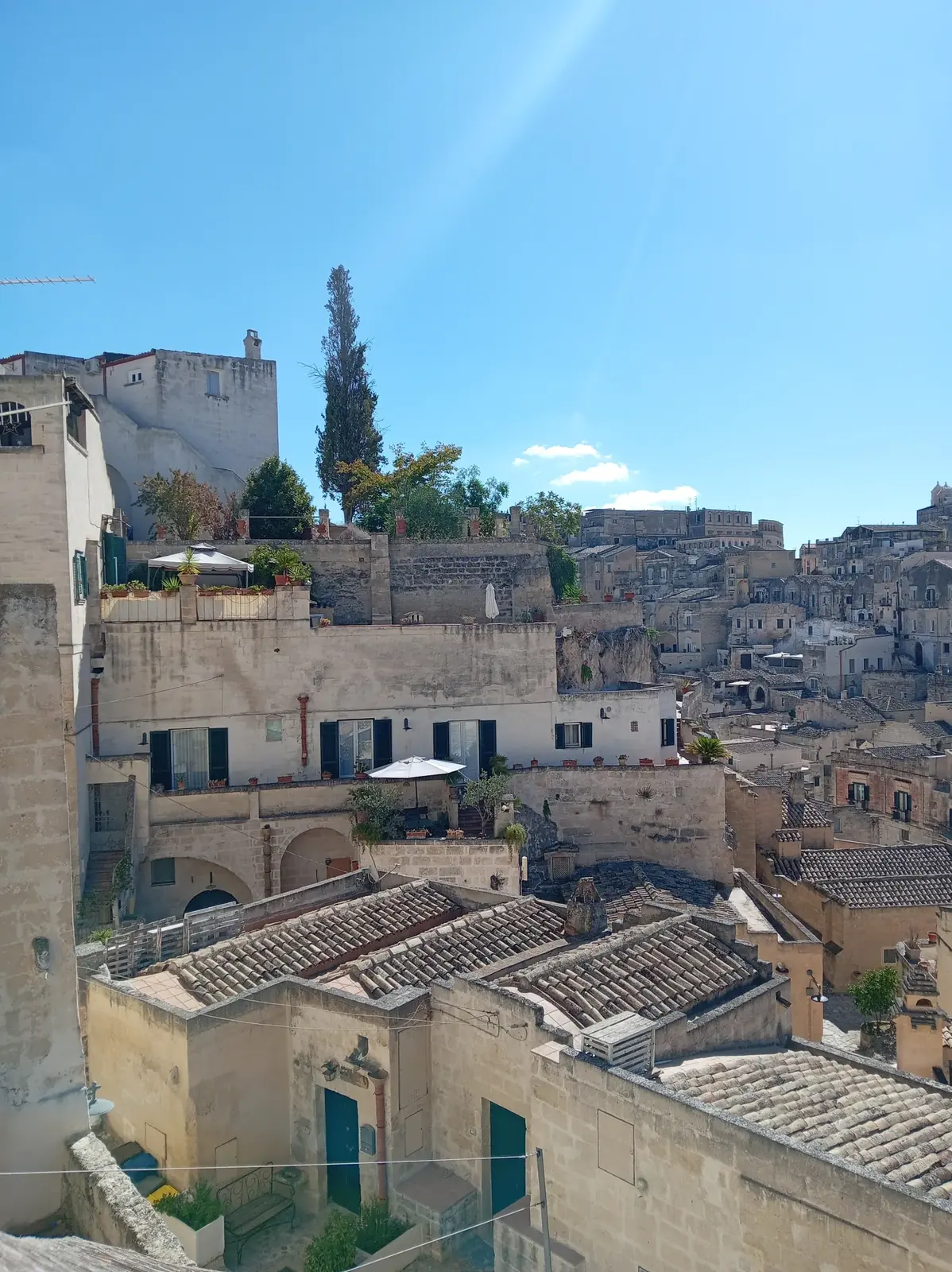
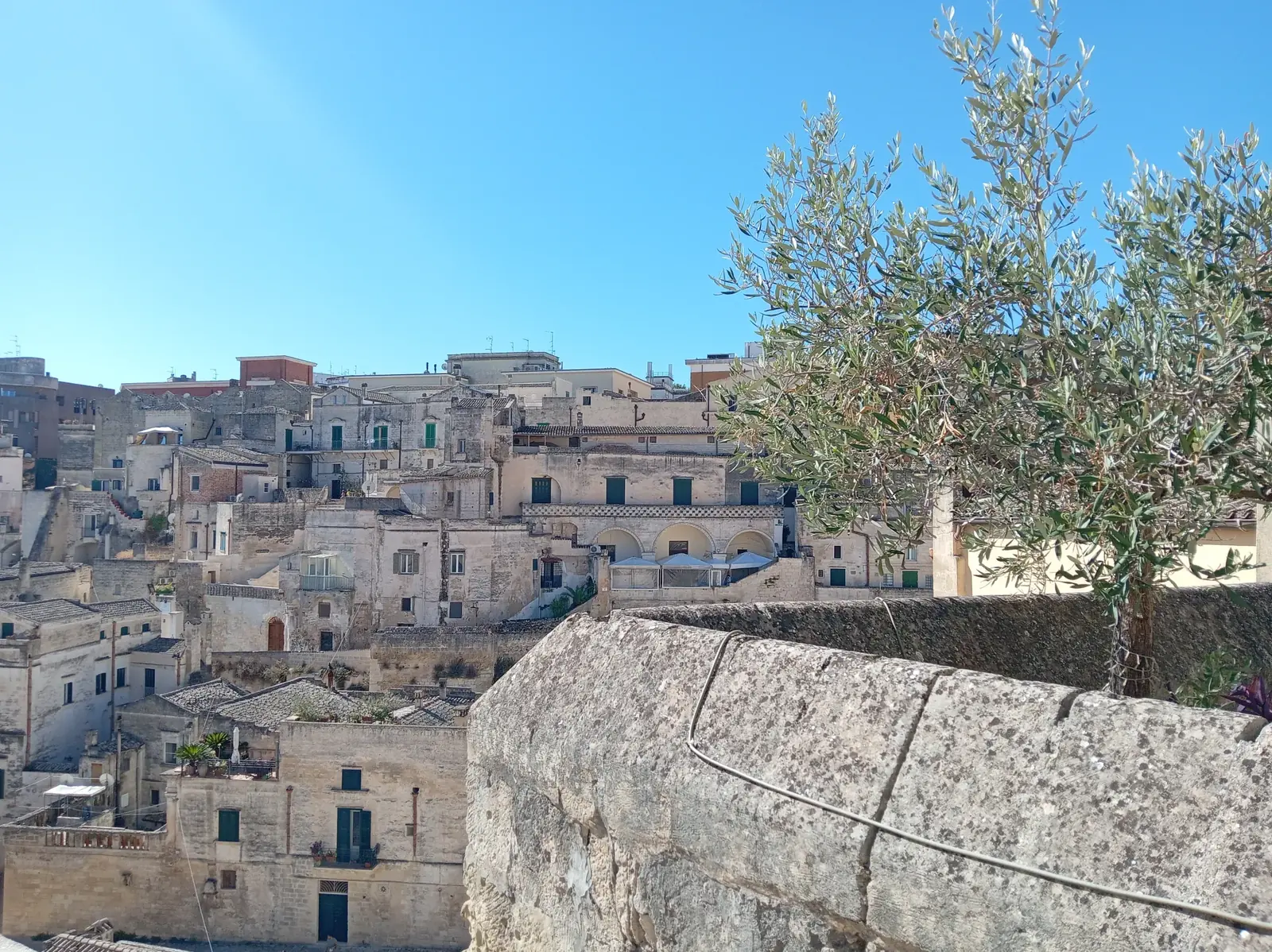
The northern Sasso looks more urban: stone façades, archways and narrow lanes. What appears to be a grown old town is, here too, largely rock – just better dressed.
House in front of cave
The Sasso Barisano is the more heavily built-over of the two districts. Over the centuries façades were placed in front of the caves, rooms added, vaults inserted. The result is a double structure: a masonry house at the front, a cave behind. Look through an open door and the pattern is immediately clear – the front room has right angles, the back one follows the stone.
This way of building was not decoration but necessity: it created windows, a way for smoke to escape and storage space where the cave offered none. It is also the reason the Barisano feels more habitable today than the Sasso Caveoso.
Why there is more going on here
Because the fabric was more robust, the revival after decades of emptiness began in the Barisano. A large share of the hotels, restaurants and workshops is in this district, and the evenings are correspondingly livelier. If you want to sleep in a cave, you will most likely end up here.
What is here
- San Pietro Barisano – the largest rock church in the city, at the lower edge of the district.
- Madonna delle Virtù and San Nicola dei Greci – a rock-church complex above the gorge, today also an exhibition space.
- Casa Cava – a concert hall in a former quarry.
- Convento di Sant’Agostino – above the northern edge, with the quietest view of the district.
Lines of sight
From the upper lanes and from Via D’Addozio you look out over the roofs of the district – a tangle of terraces, chimneys and small domes, with the cathedral bell tower rising behind. The easiest view is the Belvedere Luigi Guerricchio on Piazza Vittorio Veneto: three arches, not a single step.
Paths
Two contour lines run through the district: Via Fiorentini at mid-height, where the bars and restaurants are, and Via Madonna delle Virtù below, above the gorge. Steps in between. A proven circuit goes in along the upper line and back along the lower – see The lanes of the Sassi.
Read on
- The Sassi di Matera – the overview of both districts
- Rione Civita – the rock spur between the districts
- Casa Cava – the quarry the façades came from